The Immersive Lens Blog 3
What Does It Take to Sustain an Immersive Practice?
Beyond creative spark
Immersive work carries extraordinary creative potential, but it is also one of the most demanding areas of contemporary practice. It requires time, technical skill, interdisciplinary thinking and a capacity to work within systems that are often unstable, under-resourced or rapidly shifting. Sustainability in immersive practice is rarely only financial. It is practical, emotional and relational. It involves balancing creative ambition with technological change, the daily realities of running a business and the pressure to innovate at pace.
Through The Immersive Lens, supported by The National Lottery via Creative Scotland, we spoke with practitioners across the UK about what it truly takes to sustain this work. Their reflections reveal a landscape where creativity and ingenuity are abundant, but where long-term sustainability remains a shared challenge.
The real costs of making immersive work
Across our interviews, practitioners described immersive creation as labour-intensive and iterative, requiring significant behind-the-scenes work that is rarely visible to audiences or funders.
Sam Hunt, Chief Creative Officer at AIX Live, reflected on the complexity of building immersive systems: “Immersive systems need time. They need iteration. You cannot shortcut the process because the audience will feel it. Every layer affects every other layer.”
From a production perspective, technical sustainability is a central concern. At Suum Studio, we see how much unseen work underpins high-quality immersive design. The final environment is only possible because of hours of testing, rebuilding, refinement and technical optimisation. This work requires time, stability and space to iterate.
Freelance producer Steph Clarke also spoke about the resource required to create work that feels responsive and intentional: “To create something truly responsive, you need time to build, test and refine. You cannot do it with the pressure of immediate output.”
For Brightblack, sustainability is also emotional and strategic. Myra Appannah emphasised that diversification is no longer optional: “We cannot specialise in just one area anymore. We are continuously monitoring real-time data and trends and adapting our strategy.”
Taken together, these perspectives reinforce that immersive practice cannot be compressed into short-term production windows or minimal resource. It needs time, space, experimentation and continuity.
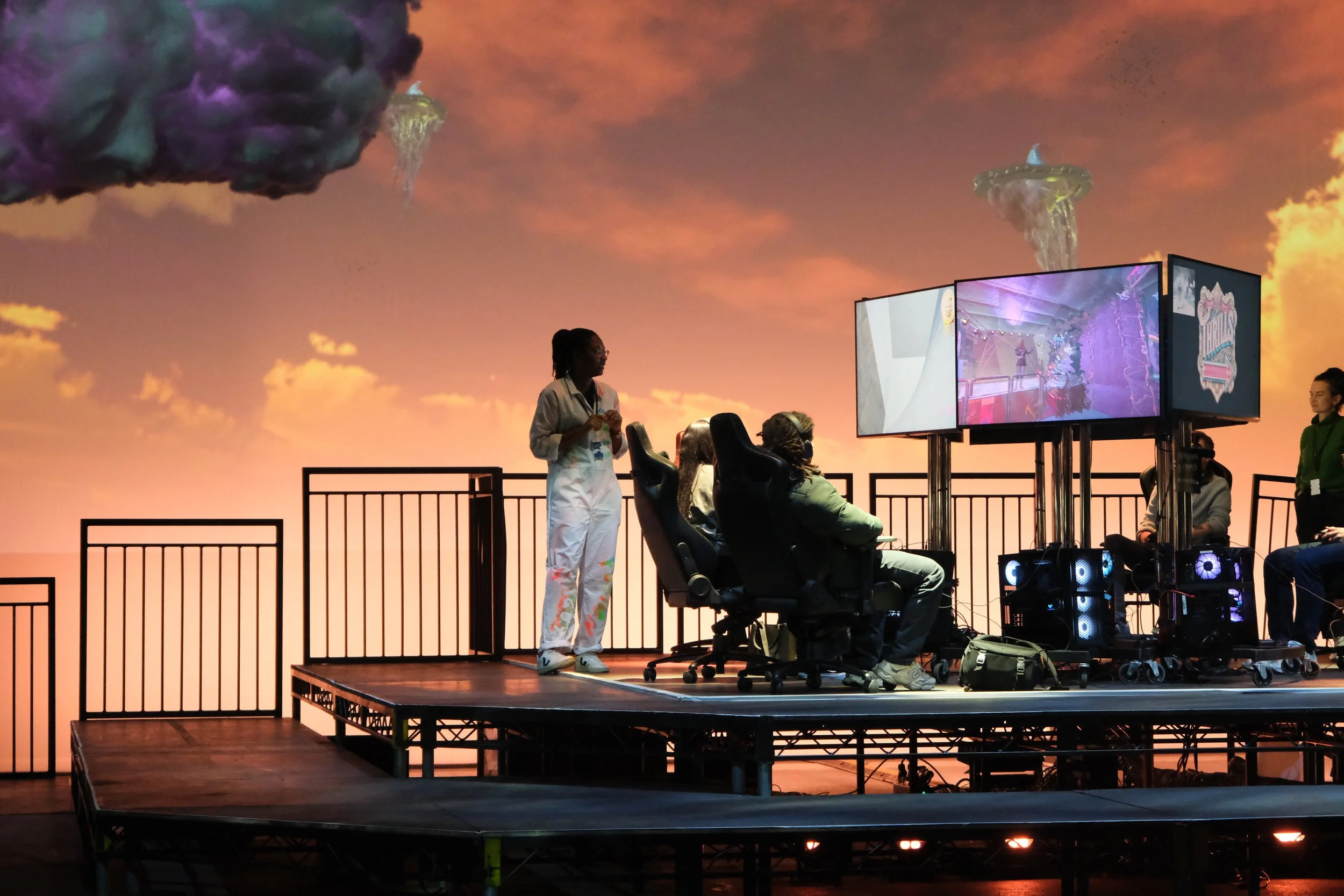
Those Who Hold Up The Sky, real-time updates live, Factory International, Manchester 2025 Image © SUUM studio
Financial sustainability: models that work and models that fail
Financial sustainability is one of the most significant pressures for immersive practitioners. There is no single business model that fits the field, and many teams blend commercial, artistic and community-oriented approaches to remain viable.
Future Artists and Ai Social Club, Mark Ashmore described a long-term approach grounded in earned income and audience development rather than institutional dependency: “We have been self-sufficient for 15 years by earning directly from audiences. You need to understand why they would pay and what they need. That is where sustainability comes from.”
Brightblack echoed this need for adaptability, explaining that dependency on traditional funding had become increasingly precarious: “Our income used to rely on consistent Arts Council funding, but that has changed completely. We had to rebuild our model. Now our work depends on learning programmes, partnerships and an algorithmic business model that uses AI to identify opportunities.”
Supermassive UK illustrated a different hybrid model, combining private investment, innovation funding and public ticketing. This has allowed them to stabilise early operations, develop proprietary tools and scale their Depot Mayfield experience for a broad audience.
HOME Manchester’s Arches residency offered another pathway. Free space, access to audiences and embedded institutional support provide a foundation for early-stage ideas to develop. As Isabelle Croissant told us: “People do not need a lot to get started. They need space and someone who understands what they are trying to do.”
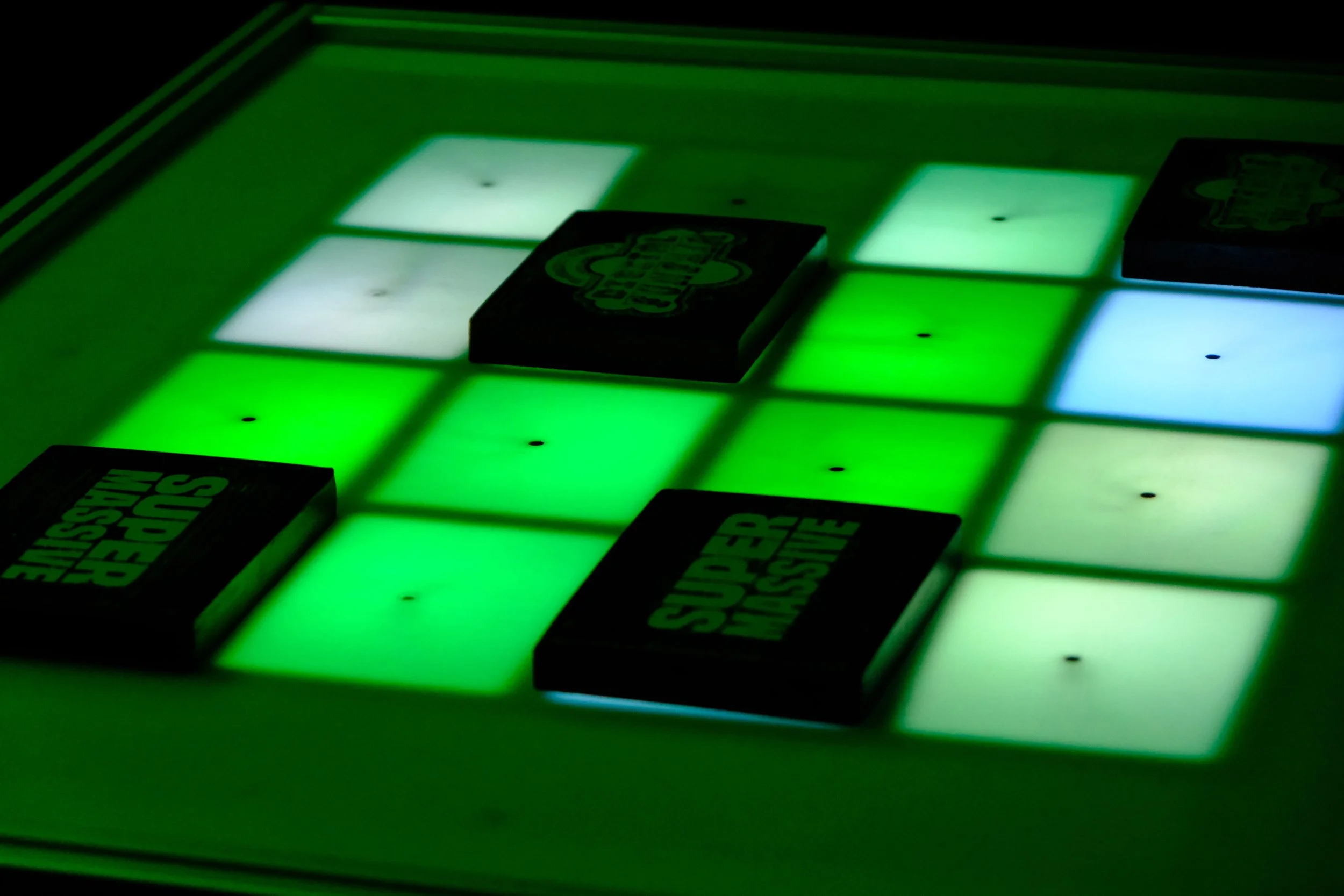
Supermassive UK, DJ Mixer interactive, Depot Mayfield, Manchester July 2025 Image © SUUM studio
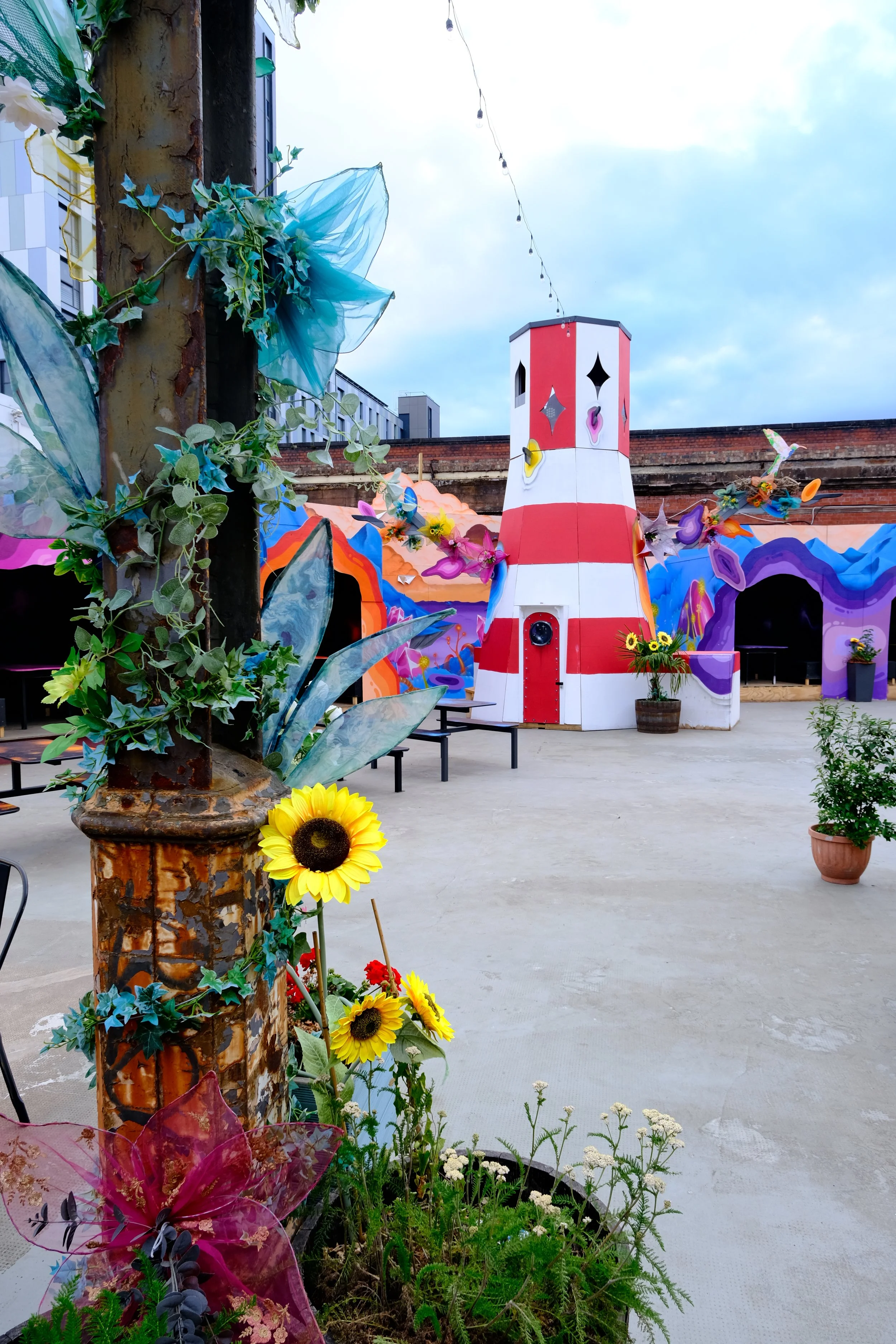
Supermassive UK, Roof Top Event Space, Depot Mayfield, Mancehster,
July 2025, Image © SUUM studio
Supermassive UK:
building sustainability through
practice and iteration
Louis Schamroth-Green, Creative Director at Supermassive UK, described sustainability as a balance between creative, operational and commercial priorities. Their early development was supported through innovation grants and private investment, but the ongoing work requires constant adjustment.
A significant pressure is marketing. Louis noted that their biggest threat to sustainability is not creative ambition or technology, but “reaching a wider audience and selling enough tickets.” Their experience suggests that hiring internal expertise is more effective than relying on external agencies, allowing rapid response to audience feedback and sales patterns.
Louis also described how sustaining an immersive practice requires a blend of grand vision and practical constraint. Experiences must remain ambitious, but also affordable, family-friendly, technically reliable and clear to communicate. Sustainability emerges through iteration, learning from peers and remaining open to adaptation.
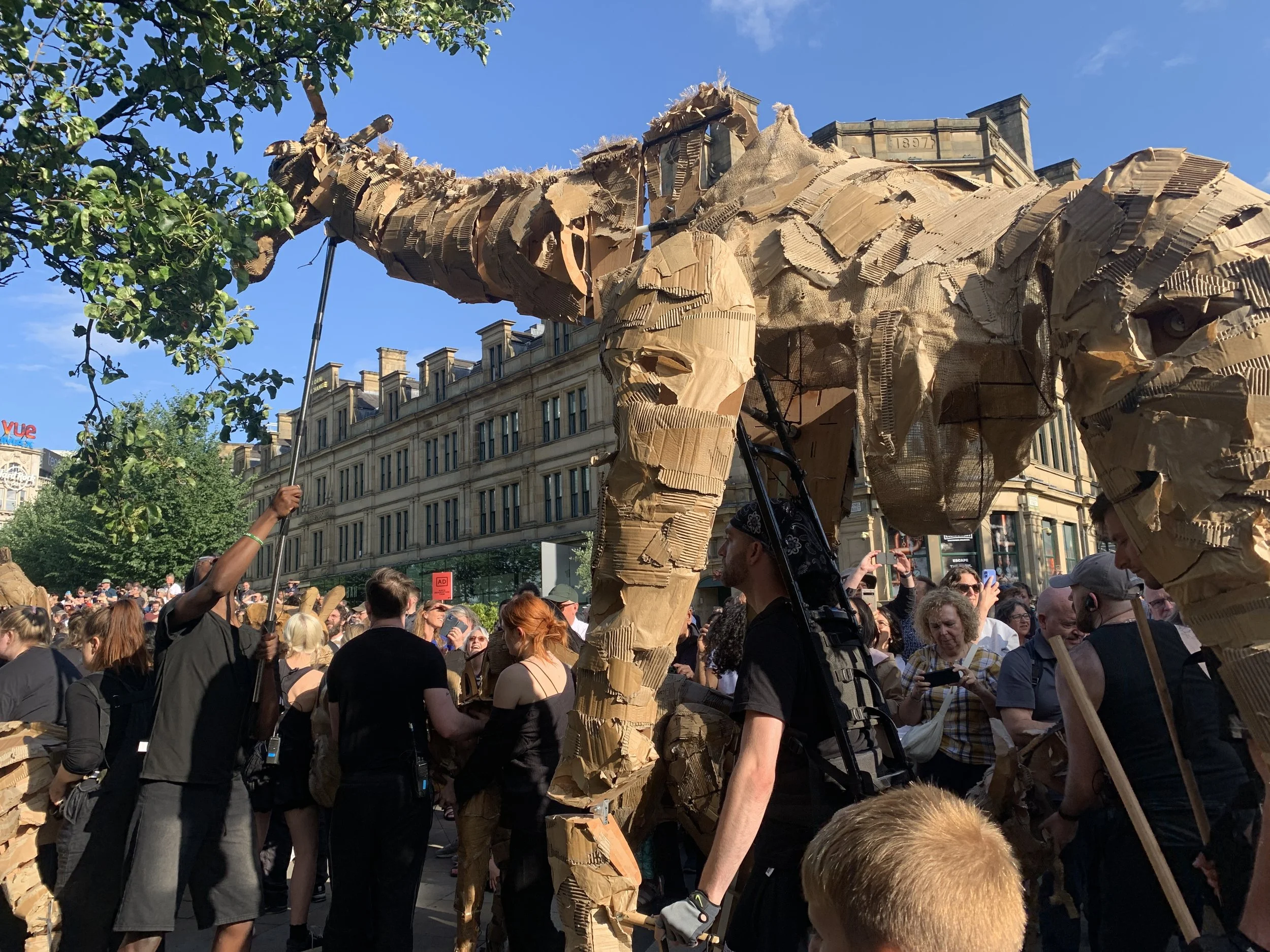
The Herds, Manchester City Centre, 2025 Image © SUUM studio
Jed Ashforth: sustainability through process, clarity and shared knowledge
Immersive consultant Jed Ashforth highlighted another dimension of sustainability: reducing hidden costs and avoiding late-stage redevelopment. Drawing on decades of experience in immersive design and games, Jed described how many teams fall into the same traps. Issues such as unclear user intention, uncomfortable interaction design or mismatched expectations often emerge late, when the cost of correction is highest.
He emphasised that sustainable practice depends on early clarity: defining the audience, the intended experience and the core interaction patterns before production scales. Manchester’s immersive community benefits from a long-standing culture of knowledge sharing, where practitioners exchange methods, references and lessons learned. This reduces duplication, accelerates development and allows teams to work with greater confidence.
Together, Louis and Jed’s insights demonstrate that sustainability is not only about funding. It is about developing resilient systems, refining processes and cultivating communities that share knowledge and reduce the cost of experimentation.
Creative sustainability: keeping the practice alive
Creative sustainability extends beyond financial resilience. It includes emotional pace, team wellbeing and the ability to experiment without excessive risk.
For Brightblack, creative sustainability is tied to collaborative working and flexible planning. Simon Wilkinson noted that immersive work requires long development cycles: “The work takes years. You need time to follow the idea where it needs to go, and that kind of development is rarely funded.”
For artists like Bo Warner at Quantum Egg Theatre, real sustainability comes from opportunity: “Training only gets you so far. You need the chance to actually do something. That is what makes spaces like the Arches such a good resource.”
At Suum Studio, we recognise the emotional dimension of sustainability. Immersive work carries intensity. It demands technical clarity, creative ambition and cross-disciplinary communication. Sustaining our practice requires space to reflect, time to test ideas and collaboration that distributes labour more evenly across teams and networks.
Infrastructure and ecosystem support
A recurring theme across our interviews was the role of local ecosystems in making immersive practice viable.
In Manchester, we encountered multiple layers of support:
• Free and donation-based public arts events
• City-wide free transport during festival periods
• Accessible pricing for large-scale performances
• Consistent open calls across MediaCity, Factory International and Salford
• Free development space at HOME’s Arches
• Grassroots hubs, XR groups, industry meetups and peer networks
These elements create an interlinked landscape where practitioners can test ideas, build audiences and access support without excessive financial pressure.
In Scotland, infrastructure investment is growing, particularly through CoSTAR, but the pathways available to practitioners remain fragmented. Many opportunities sit within academic contexts, and fewer are directly accessible to independent creators or small studios. As noted in Blog 2, there is a risk that Scotland develops capability without resourcing the people who will use it. Interviewees across the UK emphasised that sustainable immersive practice depends on investment in people. As Mark Ashmore told us: “Funding gets spread too thinly. We need long term investment in experienced people. When you invest in the coaches, you get breakthroughs.”
Sam Hunt reflected on the connection between individuals and infrastructure: “If you do not invest in the people who know how to use these tools, the infrastructure will not fulfil its potential.”
What practitioners say they need next
From our interviews, practitioners consistently identified several needs for a sustainable immersive sector.
• Long-term investment models that support iterative development
• Access to open or low-cost space for early-stage experimentation
• Joined-up networks across arts, design, creative technology and commercial innovation
• Support for true R&D, including time for failure and reflection
• Fair pay and recognition for specialist technical and creative labour
• Opportunities that do not rely on existing networks or personal resources
• Infrastructure that treats access as a cultural principle rather than an optional feature
These needs reveal a field that is ambitious, but often structurally unsupported. They also point to a collective desire to build immersion that is emotionally and socially sustainable, not only technologically pioneering.
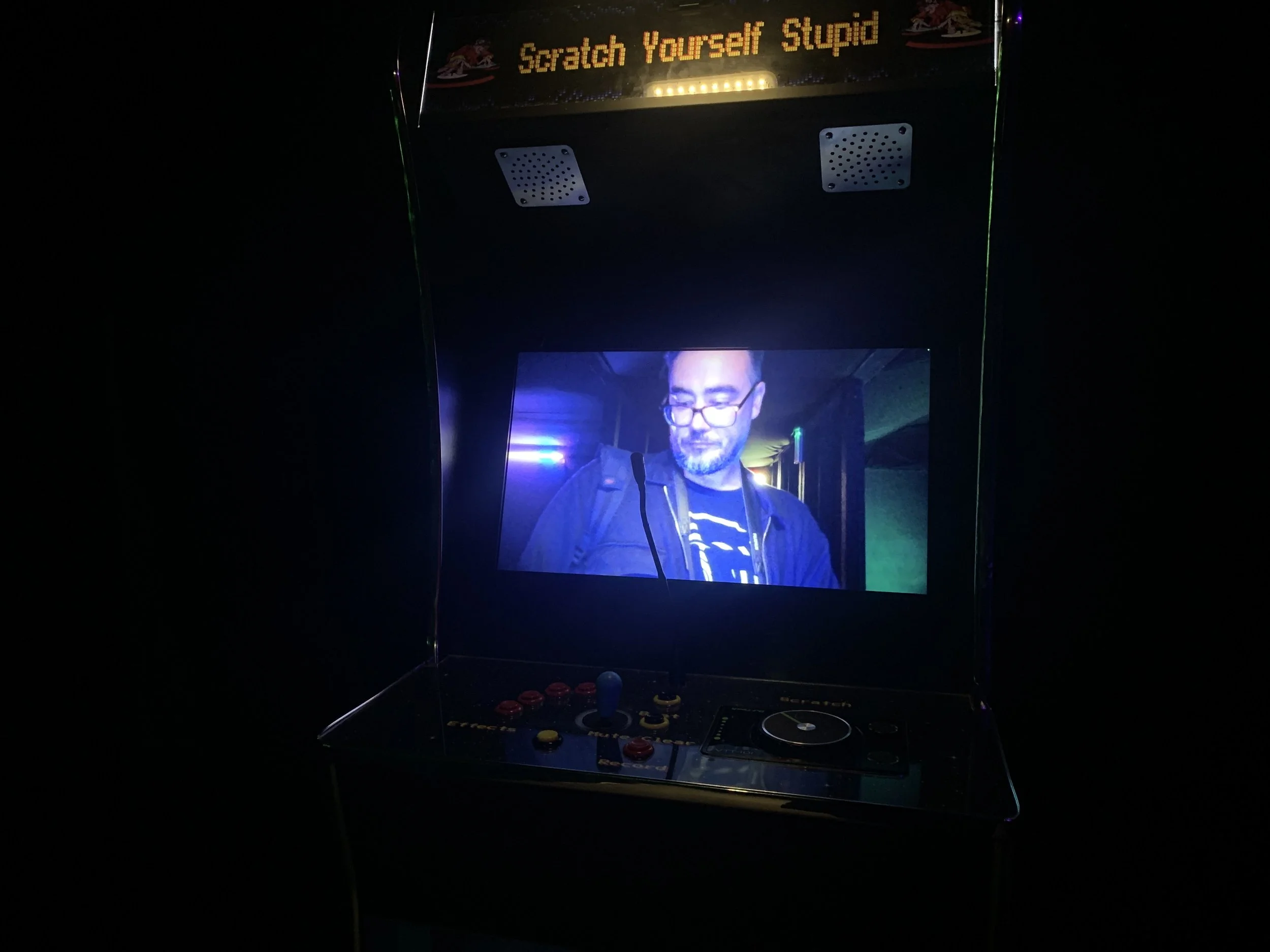
Supermassive UK, Scratch Yourself Stupid, Interactive DJ/Scratching Game, Depot Mayfield, Manchester, July 2025 Image © SUUM studio
Suum Studio reflections: sustaining our own practice
This research project has reinforced how important sustainability is within our own creative, technical and business practice at Suum Studio.
Immersive work requires time, conversation and experimentation. It demands the freedom to test ideas without the pressure of immediate outcomes and benefits from networks that support cross-disciplinary collaboration. It also requires an understanding that immersive practice evolves at a pace that rarely aligns with traditional funding cycles or project-based structures.
As we move forward, we are strengthening our R&D rhythms, refining our project pipeline and investing in long-term collaboration. We are also contributing to sector development through our involvement with national organisations, community networks and knowledge-sharing platforms, including the Discord group initiated by Jed Ashforth of Realised Realities.
Sustainability is not a destination. It is a practice. It evolves as the field evolves, and it depends on shared effort across artists, producers, technologists, institutions and communities.
Creative ecosystems in practice: mixers, networks and cross-sector events
Alongside our interviews, we also observed how cities are sustaining immersive practice through mixers, gatherings and open-access events. These environments matter: they bring together creative practitioners, technologists, educators, researchers and policymakers, creating the conditions for ideas, partnerships and opportunities to take root.
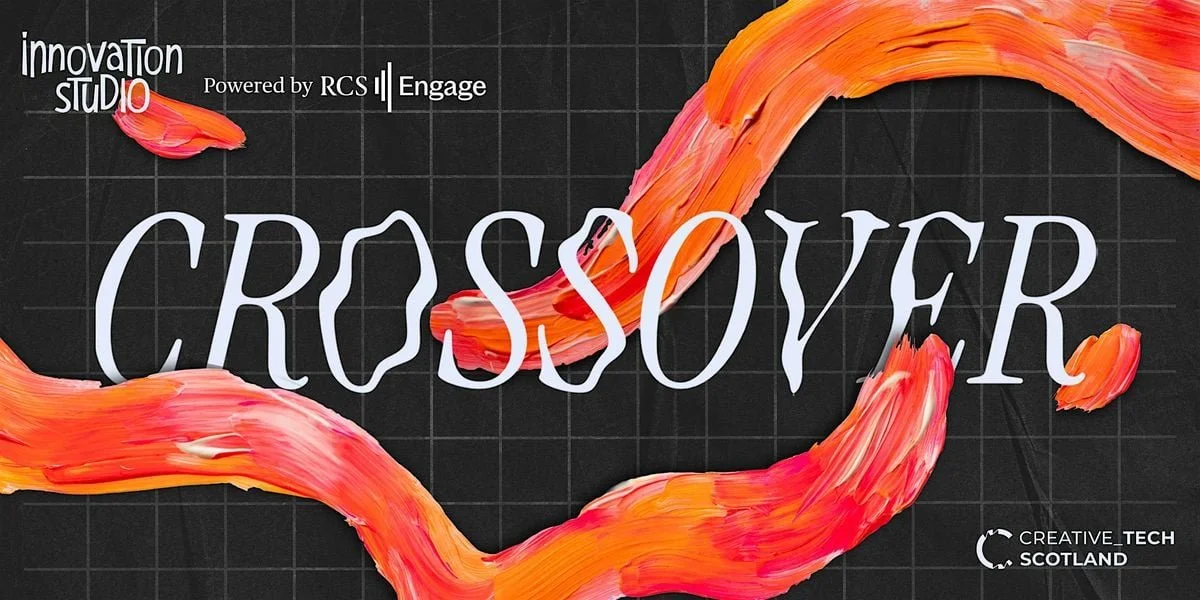
Crossover with Creative Tech Scotland Gathering builds on the Creative Tech Scotland Gathering held earlier this year (June 2025), which we attended. Taking place in December 2025 and presented by the Royal Conservatoire of Scotland’s Innovation Studio in partnership with CTSG, Crossover brings together performing arts practitioners, creative technologists, researchers and interdisciplinary innovators.
The event includes demos, networking and sector conversations, anchored by a keynote from digital artist Tupac Martir, whose work in real-time performance, virtual production and mixed-reality storytelling speaks directly to themes explored throughout this blog, sustainability, iteration and cross-disciplinary collaboration.
Crossover took place at Civic House, Glasgow, on 4 December 2025.
More information about Crossover can be found here.
BEYOND Conference 2025, the UK’s leading conference for research and innovation in the creative industries, is taking place this month (November 2025) at MediaCity UK, with more than 100 speakers and 70 sessions exploring the future of creative technology.
During our July research trip, multiple interviewees pointed to BEYOND as a vital space for connecting industry, academia and emerging talent, a reference point for how joined-up infrastructure and cross-sector collaboration can operate at scale.
This year’s BEYOND Creative Mixer, delivered in partnership with Salford Council, GM Business Growth Hub, the University of Salford and MediaCity UK, and part-funded through the UK Shared Prosperity Fund, demonstrates how regional investment can create accessible, open environments for creative exchange.
More information about BEYOND can be found here.
Events like Crossover and BEYOND are more than networking spaces. They illustrate how mixers, peer networks and open gatherings form essential threads in the wider ecosystem, helping practitioners share knowledge, see emerging work in context and access the relationships, visibility and infrastructure required to sustain long-term immersive practice.
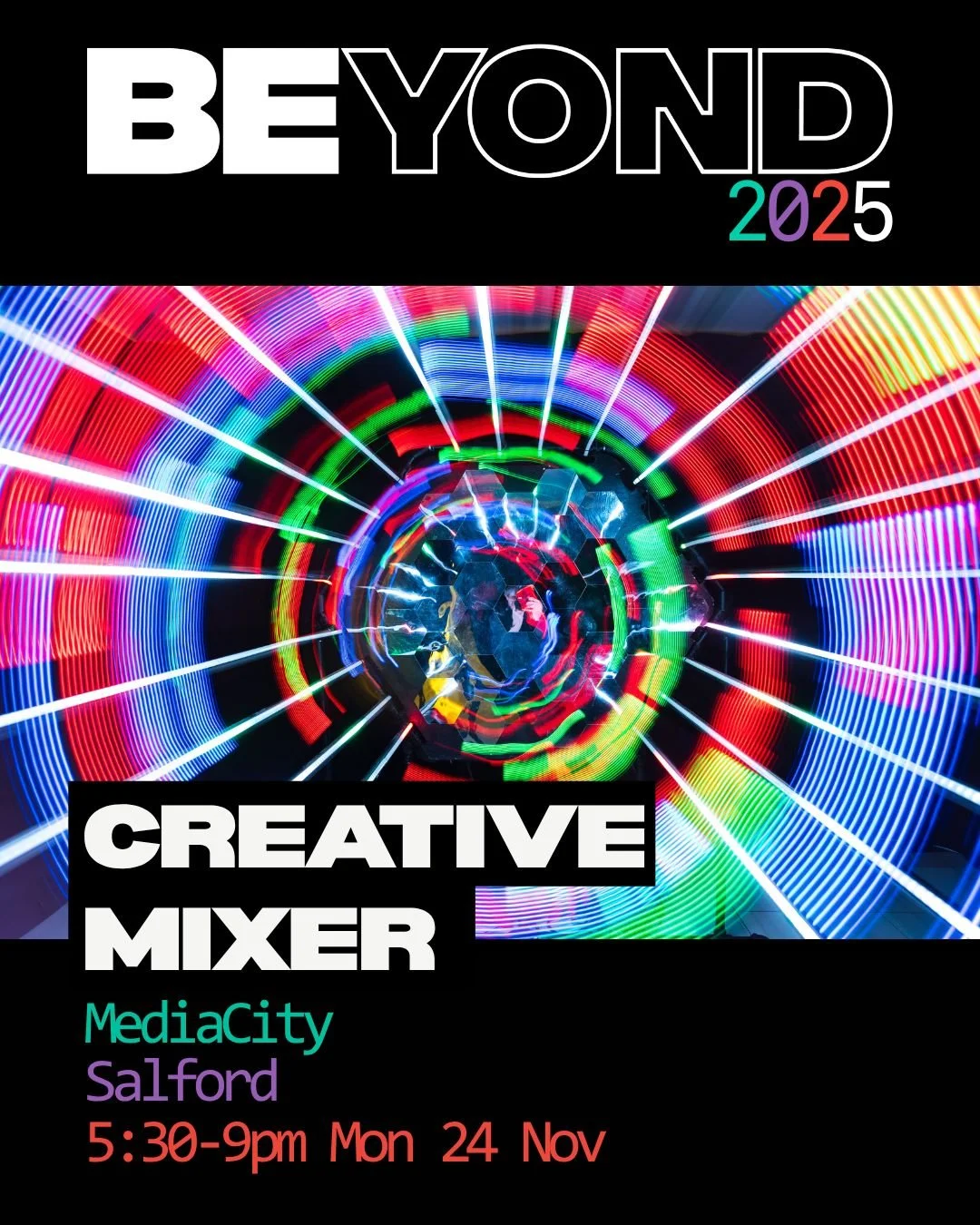
Beyond Conference 2025, the UK’s leading creative R&D conference, held at MediaCity UK. The programme features more than 100 speakers across three days of talks, demonstrations and sector debate, delivered in partnership with Salford Council, GM Business Growth Hub, the University of Salford and MediaCity UK, part-funded through the UK Shared Prosperity Fund.
About The Immersive Lens
This blog is part of The Immersive Lens, a Creative Scotland–supported research project by SUUM Studio. With funding from the National Lottery through Creative Scotland’s Go See Share programme, we travelled to Manchester to explore how immersive creatives across the UK are sustaining their work, creatively, financially, and emotionally.
Over the course of the project, we engaged with more than 20 practitioners working at the intersection of immersive arts, technology, design, and storytelling. We visited exhibitions, attended public and industry events, and held in-depth interviews with artists, technologists, curators, producers, and strategists shaping the future of immersive practice.
What we heard, and what we saw, is shaping this blog and vlog series. Each post will share insights, provocations, and reflections drawn from our field research, in the hope that they’ll support others navigating this evolving landscape.
The Immersive Lens was supported by the National Lottery through Creative Scotland.
Crossover with Creative Tech Scotland Gathering, presented by the Royal Conservatoire of Scotland’s Innovation Studio in partnership with CTSG. The event brings together performing arts practitioners, creative technologists and interdisciplinary innovators for demos, networking and sector conversations, with a keynote by digital artist Tupac Martir.
Coming soon
This post is part of The Immersive Lens, a blog and vlog series by Suum Studio.
Next up: Blog 4 - The role of local infrastructure in immersive innovation
Subscribe at SUUM NEWS or follow us on LinkedIn, TikTok and Instagram for behind-the-scenes content, new posts and future collaborations.

Image credits:
Header image - Supermassive UK, Depot Mayfield, Manchester 2025
Image 1 - Those Who Hold Up The Sky, real-time updates live, Factory International, Manchester 2025
Image 2-Supermassive UK, Roof Top Event Space, Depot Mayfield, Manchester, July 2025
Image 3 - The Herds, Manchester City Centre, 2025 Image © SUUM studio
Image 4 - Supermassive UK, DJ Mixer interactive, Depot Mayfield, Manchester July 2025
Image 5 - Supermassive UK, Scratch Yourself Stupid, Interactive DJ/Scratching Game, Depot Mayfield, Manchester, July 2025
Image 6 - Beyond Conference 2025, Creative Mixer Poster
Image 7 - Crossover with Creative Tech Gathering, Mixer event graphic
Footer image - Frameless x National Portrait Gallery, Event poster showcasing other Frameless immersive expereinces, MediaCity, Manchester 2025
All images © SUUM studio unless otherwise stated