
The Immersive Lens Blog 4
What is The Role of Local Infrastructure in Immersive Innovation?
Infrastructure matters
Infrastructure is often imagined as buildings, studios or technology. For immersive practice, however, it is much broader. It includes people, networks, funding pathways, affordable space, civic systems, transport, digital access, industry support and the cultural values that determine who is invited into the work.
Infrastructure shapes who gets to innovate, how work is developed and whether immersive ideas can move from prototype to public experience. It influences whether creative-tech practitioners can build sustainable businesses, whether artists can experiment and whether audiences can meaningfully access what is being made.
Through The Immersive Lens, supported by The National Lottery via Creative Scotland, we set out to understand how different UK regions approach these questions. Manchester, in particular, revealed a layered ecosystem where infrastructure is treated as both a civic and cultural priority.
Scotland has significant investment emerging through Immersive Arts UK (IAUK), CoSTAR and university-based innovation hubs such as XR-RIG at the University of Glasgow and the Royal Conservatoire of Scotland’s Innovation Studio. Yet the pathways for industry-facing support remain fragmented.
IAUK Round 1 funding shows Scotland is not underserved at the earliest stages. However, creative-tech SMEs developing intellectual property, tooling or commercial immersive work still lack the sustained R&D structures they need.
It is important to recognise that IAUK is an arts fund rather than an industry development programme for creative-tech SMEs. Practitioners working at the intersection of art, design and technology therefore require additional support structures aligned to their realities: multi-year R&D time, intellectual property development funding and clearer commercialisation pathways.
This blog explores how infrastructure shapes immersive innovation, what we observed in Manchester and Scotland, and what practitioners across the UK told us they need next.
During our research trip in July 2025, Manchester demonstrated how layered, interconnected infrastructure can support immersive work to grow, evolve and remain accessible.
Across the project, we engaged with more than fifteen practitioners in Manchester and a further eight in Scotland, with additional insight shared through our CoSTAR Network Ideate residency. Together, these conversations revealed how different regional infrastructures shape creative and commercial sustainability.
In Manchester, activity took place across grassroots maker spaces, civic arts institutions, commercial tech hubs, research environments and informal community-led meetups. This multiplicity of entry points made the ecosystem feel porous rather than siloed.
Collaboration between Factory International, MediaCity UK, Salford City Council, the University of Salford, creative SMEs and groups such as Ai Social Club or XR meetups created a network of overlapping support rather than isolated pockets of activity.
What we observed in Manchester
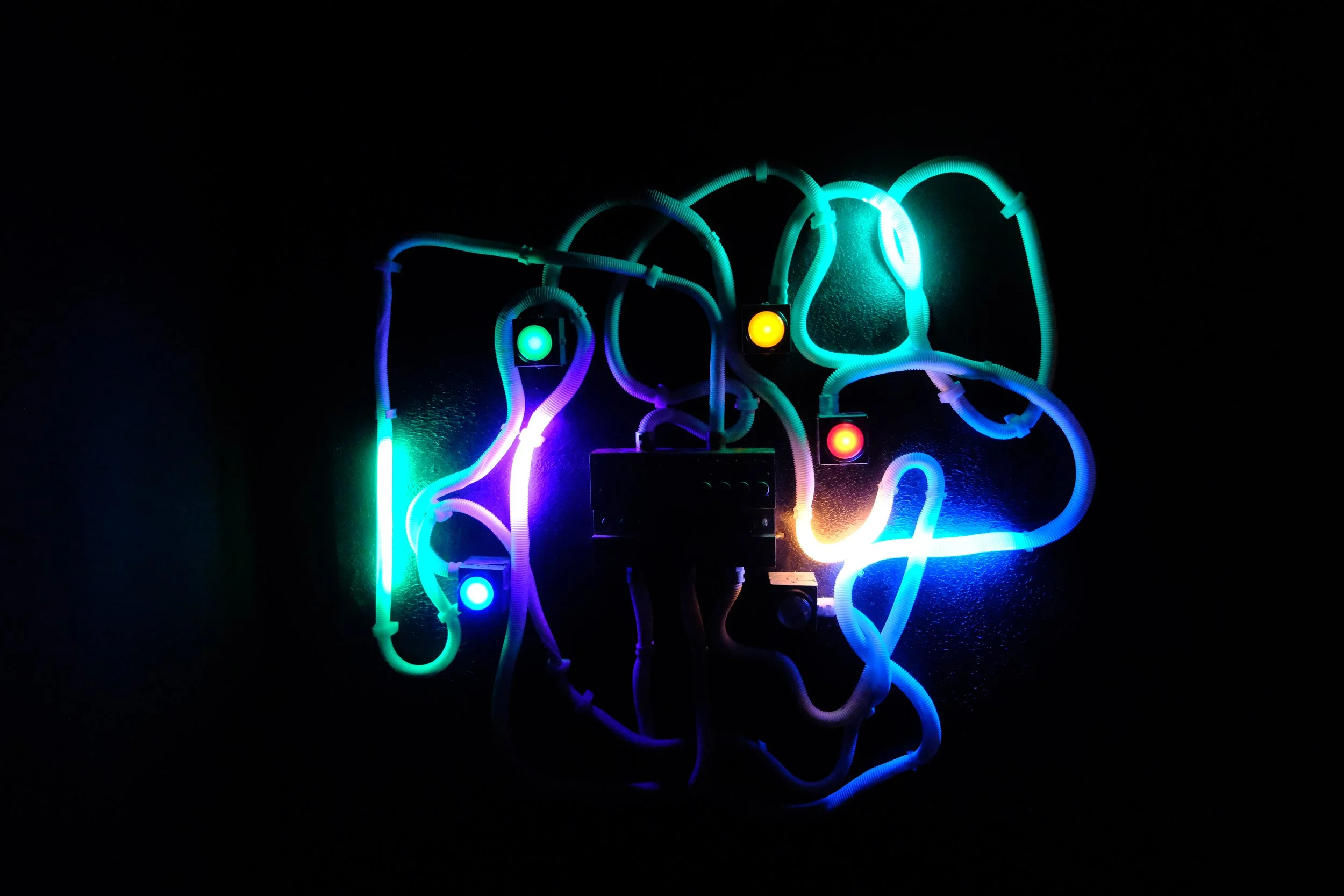
Fale Sa Sacred House FAFSWAG Arts Collective,part of MIF25,
HOME Manchester 2025 Image © SUUM studio
Accessibility was embedded into the city’s civic fabric.
Free city-wide transport during festival periods made it easy to move across neighbourhoods and attend events without cost becoming a barrier. Many public-facing projects were free or donation-based, including parts of Manchester International Festival’s programme and Echo Salford’s immersive music heritage trail.
Factory International’s £10 tickets for both local and international performances demonstrated that ambition and affordability can coexist.
Public spaces also functioned as cultural infrastructure. The Herds, a large-scale participatory performance during the festival, transformed the city into a stage and placed creative collaboration directly into public life. Echo Salford reconnected residents with decades of independent music history, using immersive storytelling to revive cultural memory rather than generate spectacle.
Dedicated making space played an equally significant role. HOME’s Arches offered free studios to artists priced out of the city centre. MediaCity UK provided space and structured support for creative-tech companies developing prototypes, products and new forms of digital work. Factory International offered continuous cycles of prototyping, commissioning and presentation.
These systems were supported by civic ambition. Salford City Council, GM Business Growth Hub and MediaCity UK demonstrated how local authorities can actively strengthen creative economies by supporting space, networks and public-facing programming.
The result was an ecosystem where infrastructure was not simply a facility but a shared cultural value.
Interviewees repeatedly emphasised that infrastructure is effective only when it supports people.
Sam Hunt of AIX Live noted that investment in tools is meaningless without investment in the practitioners who know how to use them. Mark Ashmore of Future Artists and Ai Social Club described Manchester’s “open door” culture, where knowledge-sharing is standard practice. Isabelle Croissant of HOME Manchester emphasised that emerging artists often need relatively little to get started: space, encouragement and someone who understands their intentions.
These insights reveal a city where infrastructure functions not only as a physical resource but as a social and cultural commitment.
Infrastructure as civic culture
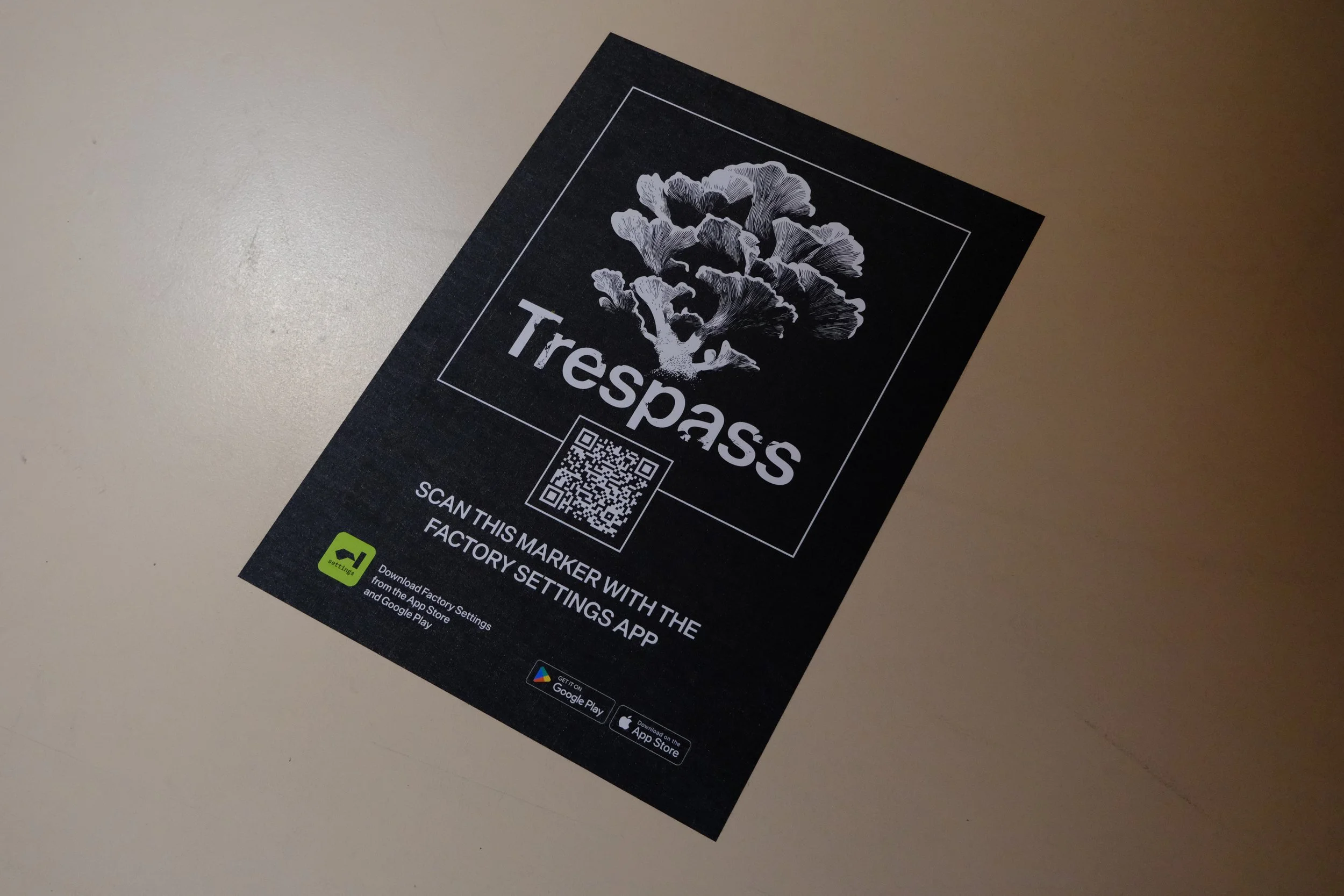
Trespass, Free Augmented Reality experience by Superflux at Aviva Studios shared via their Factory Settings App
Manchester, July 2025, Image © SUUM studio
How infrastructure enables innovation
Innovation in immersive work depends on time, space and the freedom to iterate.
Practitioners across our research emphasised that immersive work requires long development cycles, technical rehearsal time and opportunities to test ideas before they are ready for public view. Simon Wilkinson of Brightblack described immersive creation as a multi-year process rather than something that can be rushed. Sam Hunt reinforced the essential role of iteration in achieving quality and stability.
This need for protected R&D time was repeatedly described as the difference between creative momentum and burnout.
Freelance producer Steph Clarke spoke about the tension between innovation and pace, explaining that immersive work cannot be meaningfully developed under the constant pressure of delivery. Concepts evolve through experimentation, breaking and rebuilding, and this process rarely aligns with traditional project timelines.
At Suum Studio, we experience these pressures directly. Real-time environments need to be tested across devices, lighting conditions, sound systems, audience behaviours and performance contexts. Each iteration reveals new dependencies and new opportunities. R&D is not an optional step; it is the foundation of sustainable immersive practice.
Immersive consultant Jed Ashforth highlighted a complementary insight: process clarity is itself a form of infrastructure.
When audience intention, interaction patterns, experiential tone or technical constraints are undefined early in a project, the cost of correction later becomes immense. Many immersive teams encounter the same avoidable challenges because early-stage testing or shared methodology is absent.
Pipelines, research frameworks, documentation, prototyping processes and shared standards all contribute to sustainability. When interdisciplinary teams share vocabulary, tools and expectations, projects become more resilient.
Alongside physical and procedural infrastructure sits a third pillar: knowledge infrastructure.
In Manchester, some of the most important enablers of immersive innovation existed not in buildings but in relationships. Ai Social Club, XR meetups, Discord channels and gatherings such as the BEYOND Creative Mixer created spaces for open exchange. Producers compared methods, technologists shared solutions, artists tested ideas and emerging practitioners gained insight without formal institutional access.
As Mark Ashmore described, this kind of shared learning “keeps the ecosystem alive between projects.”
Infrastructure, in this sense, is social. It grows when knowledge flows.
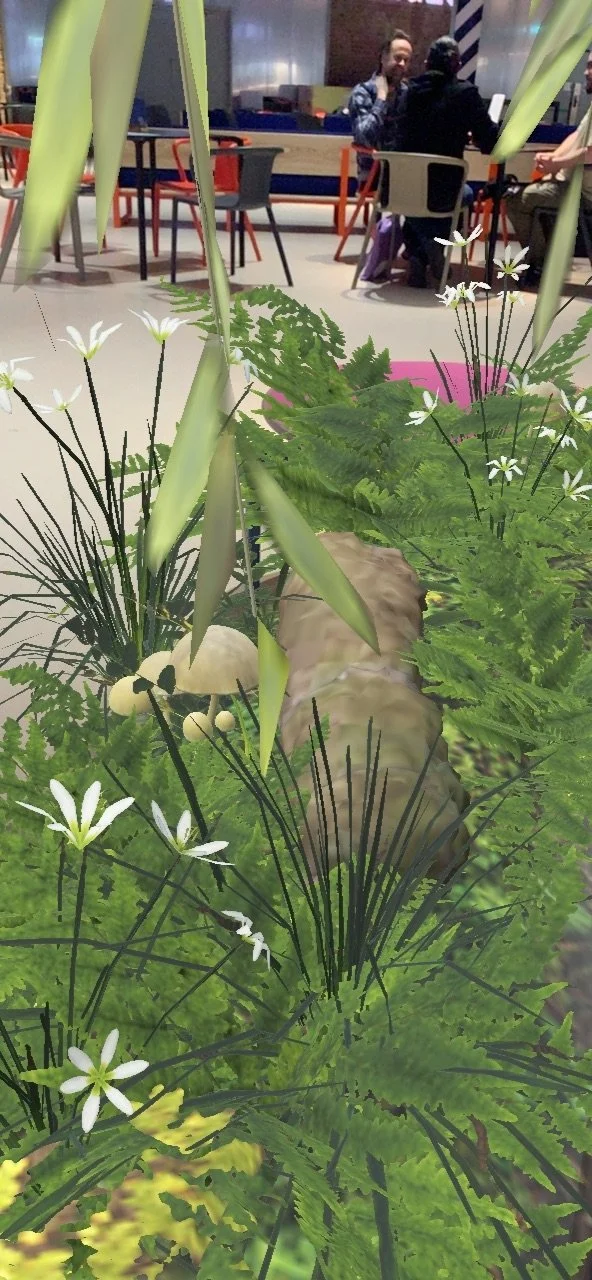
Trespass, Free Augmented Reality experience by Superflux with
3D Artist Adam Sinclair and
App Developers NEEEU
Manchester, July 2025, Image © SUUM studio
Scotland also has significant strengths in immersive and digital infrastructure.
Investments in research and creation are growing across major institutions. Edinburgh Futures Institute is building capability around data-driven creativity and interdisciplinary experimentation. Glasgow University’s XR-RIG combines real-time technology, performance, design and computation while working with industry partners and training the next generation of immersive practitioners.
Sector-led initiatives are emerging too. Creative Tech Scotland Gathering and the Innovation Studio at the Royal Conservatoire of Scotland both create space for cross-sector dialogue, bringing together performing arts practitioners, creative technologists, designers, educators and researchers.
CoSTAR Netowrk forms one of the most significant pillars of this landscape. Supported by £75.6 million from the UKRI Infrastructure Fund and delivered through Abertay University and the University of Edinburgh, it includes a £9 million virtual production facility in Dundee with further facilities planned in Edinburgh.
These investments position Scotland prominently within the UK’s immersive R&D ecosystem.
Yet a central question remains: how accessible are these environments to on-the-ground practitioners?
Much of Scotland’s infrastructure is held within academic or institutional settings. While ambitious and technically advanced, these environments are not always industry-facing. For small studios, freelancers and creative-tech companies, pathways into these spaces can be limited or time-intensive.
This creates a paradox. Scotland is developing exceptional capability at a national level, but many practitioners still lack the open, low-cost, industry-led spaces that support early experimentation and sustained R&D.
The ambition and talent are present. What is needed now is a stronger connection between capability and access.
Scotland’s infrastructure landscape
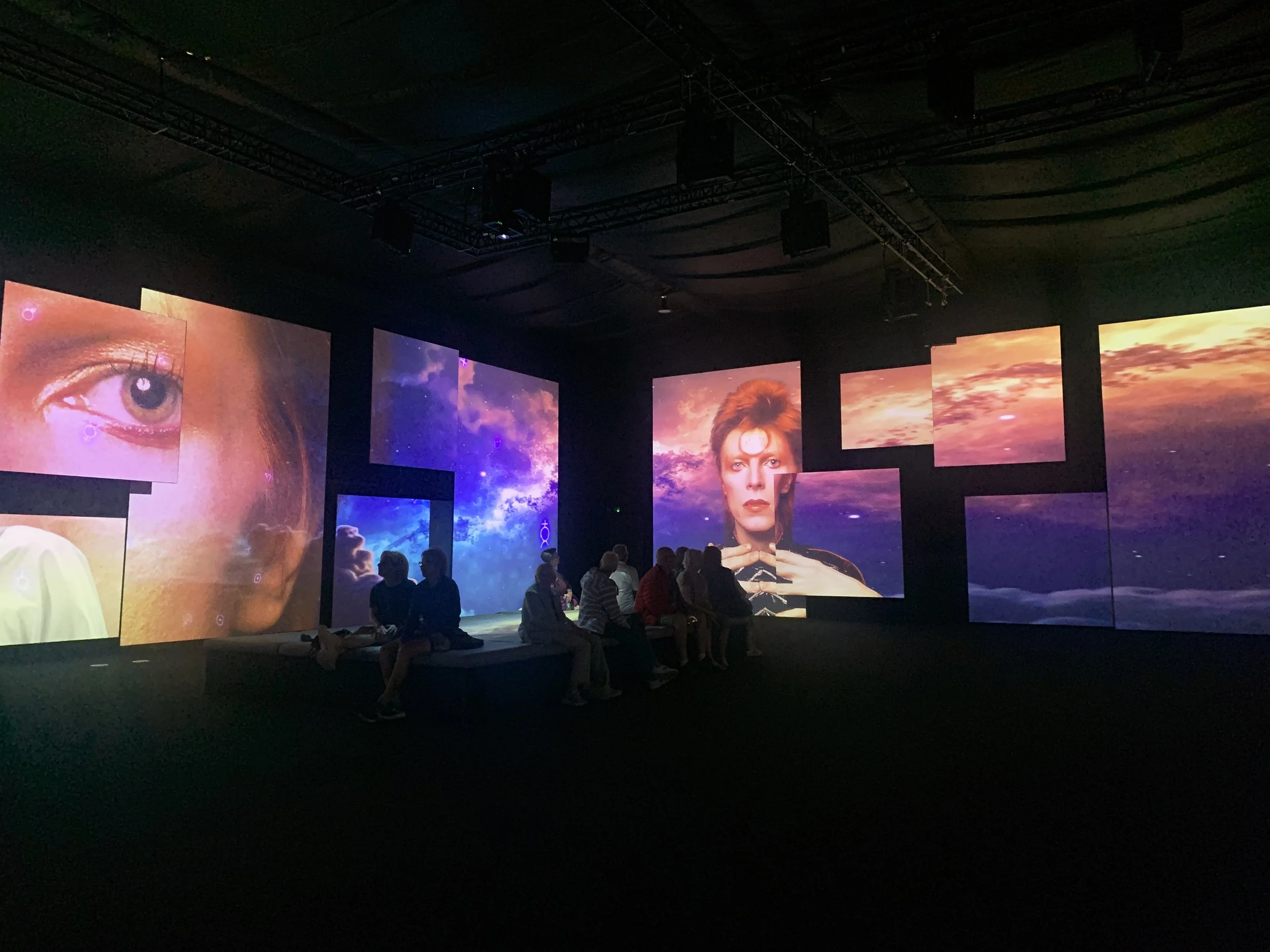
Stories Brought To Life Frameless x National Portrait Gallery, Immersive Pop-Up, Media City, Salford Quays, July 2025 Image © SUUM studio
Scotland already has robust sector-specific support systems that blend advocacy, development and structural investment.
Scottish EDGEcombines business funding with affordable loans and clearly defined entry points that help high-growth companies develop sustainably. In the music sector, theScottish Music Industry Associationprovides coordinated sector leadership, while the SAY Awardoffers national recognition and meaningful financial uplift.
Creative Entrepreneurs Clubsupports practitioners across Scotland and disciplines through mentoring, peer networks and business development, while organisations such as Creative Glasgow and Creative Edinburghchampion creative practitioners at a local level.
Sector bodies such as Craft Scotland and the Scottish Artists Union provide advocacy, development support and professional representation for makers and visual artists. Organisations such as Cultural Enterprise Office also support creative practitioners and small companies with business development, training and mentoring, demonstrating how coordinated support structures can strengthen creative sectors.
Enterprise and innovation agencies also contribute to Scotland’s wider development landscape. Scottish Enterprise, Highlands and Islands Enterprise and South of Scotland Enterpriseprovide business growth support, research insight and regional investment programmes. Initiatives such as Techscaler, which supports startups through mentorship, workspace and accelerator programmes, demonstrate how coordinated innovation infrastructure can help companies develop skills, networks and commercial pathways.
Together, these examples show that Scotland is capable of building strong industry-facing support when a sector is clearly defined and supported through a coordinated ecosystem.
What immersive practice and creative-tech currently lack is an equivalent infrastructure: a recognisable sector identity, a central body for advocacy and clear pathways that allow practitioners to move from early experimentation to sustainable practice.
The opportunity now is to build one.
The question is not whether Scotland has the talent or ambition for immersive innovation, but how the structures that support that talent evolve in the years ahead.
Learning from existing Scottish models
What practitioners say they need from infrastructure
Across our interviews in Manchester, Glasgow, Edinburgh and Dundee, practitioners described remarkably similar needs.
Many spoke about the importance of long-term access to development space — stable environments where ideas can unfold gradually outside the pressures of project delivery. Without such spaces, early experimentation becomes risky and smaller studios struggle to sustain innovation.
Others highlighted the lack of industry-facing support. Creative-tech businesses operate differently from traditional arts organisations. They carry technical overheads, mixed revenue models and longer development cycles.
R&D stability was a recurring theme. Innovation requires time to test, prototype, fail and iterate. Many interviewees told us that the most important work happens between projects, in the unstructured space where ideas take shape.
Cross-sector collaboration was another frequently cited need. Artists wanted easier access to technologists. Technologists wanted opportunities to work with performers, designers and academics. Producers sought clearer routes into commercial partnerships.
Participants also described the difficulty of navigating opportunities. Funding, residencies and studio access are often scattered across institutions, making it challenging to understand what is available.
Finally, practitioners emphasised the importance of knowledge-sharing communities. Mixers, meet-ups, Discord networks and XR groups help learning circulate and maintain momentum.
Many described these spaces as the infrastructure that keeps the sector alive between funded projects.
Suum Studio reflections: working within Scotland’s evolving landscape
Our research reinforced how central infrastructure is to sustaining our own practice at Suum Studio. Immersive work needs time to develop, space to test ideas and networks that support open collaboration. These conditions enable creativity but also provide the technical resilience required to sustain long-term practice.
Scotland has many of the elements needed for a thriving immersive ecosystem: strong arts institutions, growing creative-tech energy and national investment in research. Yet pathways for industry-facing support remain limited.
Much of the existing infrastructure sits within academic or institutional environments that are not always accessible to small studios or freelance practitioners. R&D, in particular, remains difficult to sustain within project-based models.
What this research made clear is that infrastructure is a collective endeavour. It is built through collaboration, shared learning and support for the people shaping the work.
Across this research, a consistent pattern has emerged: how we define immersive work, who is able to participate in it, how practitioners sustain their practice and the infrastructures that support them are deeply interconnected.

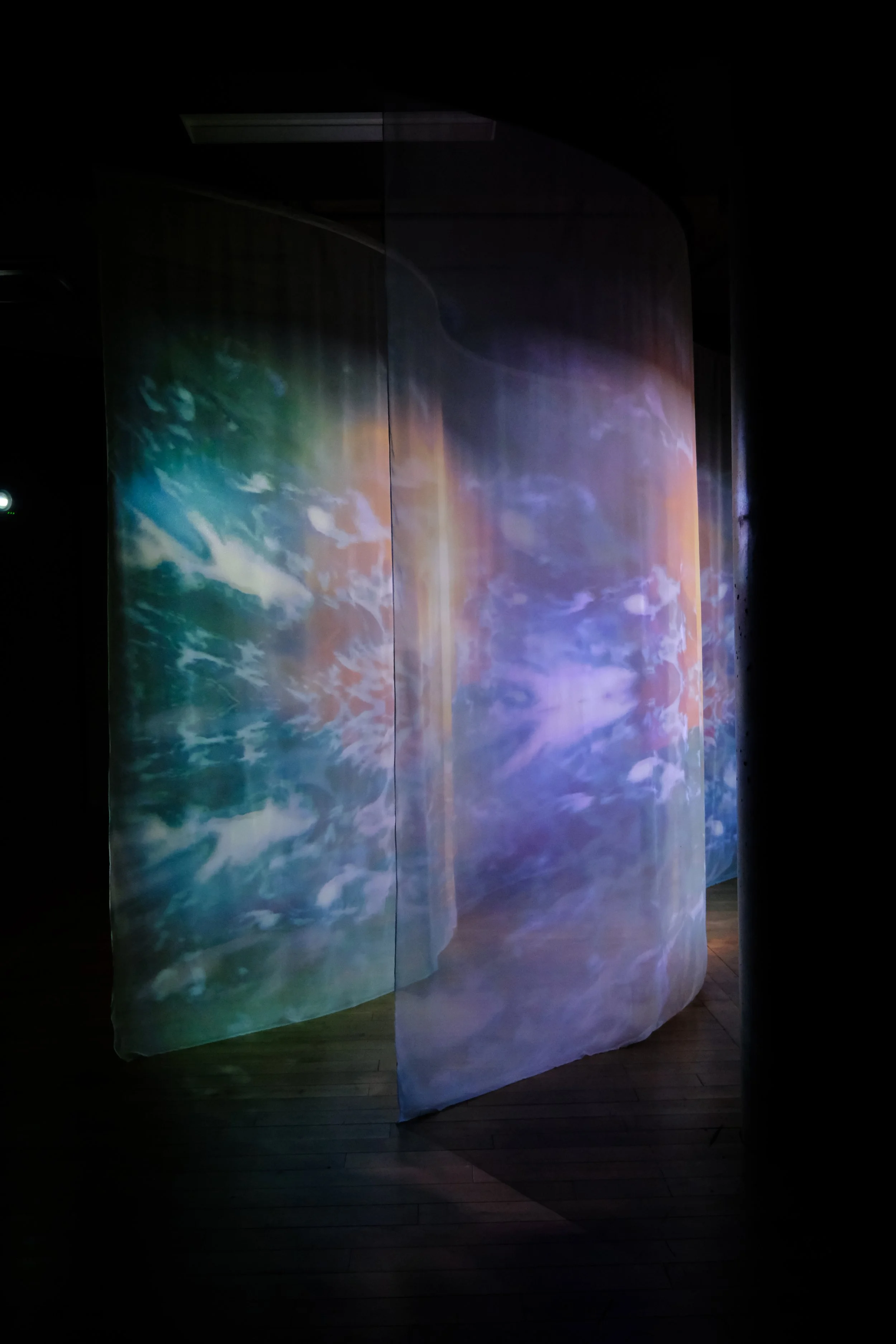
Supermassive UK, Salford Shopping Centre Installation,
March 2025 Image © SUUM studio
Immersive innovation flourishes when infrastructure is understood not only as a technical resource but as a cultural, economic and civic priority.
The most compelling work emerges in places where artists, technologists, producers, educators and communities can meet, share ideas and develop new ways of working.
Manchester demonstrates what layered, cross-sector infrastructure can achieve.
Scotland has the foundations to build something equally ambitious.
The future of immersive practice will depend not only on the tools we develop, but on the ecosystems that support the people who imagine, build and sustain them.
Infrastructure can grow talent, support experimentation and make innovation possible.
As this field evolves, the decisions we make about access, space, collaboration and support will shape the futures we are able to imagine, and build.
Infrastructure builds ecosystems, ecosystems build futures
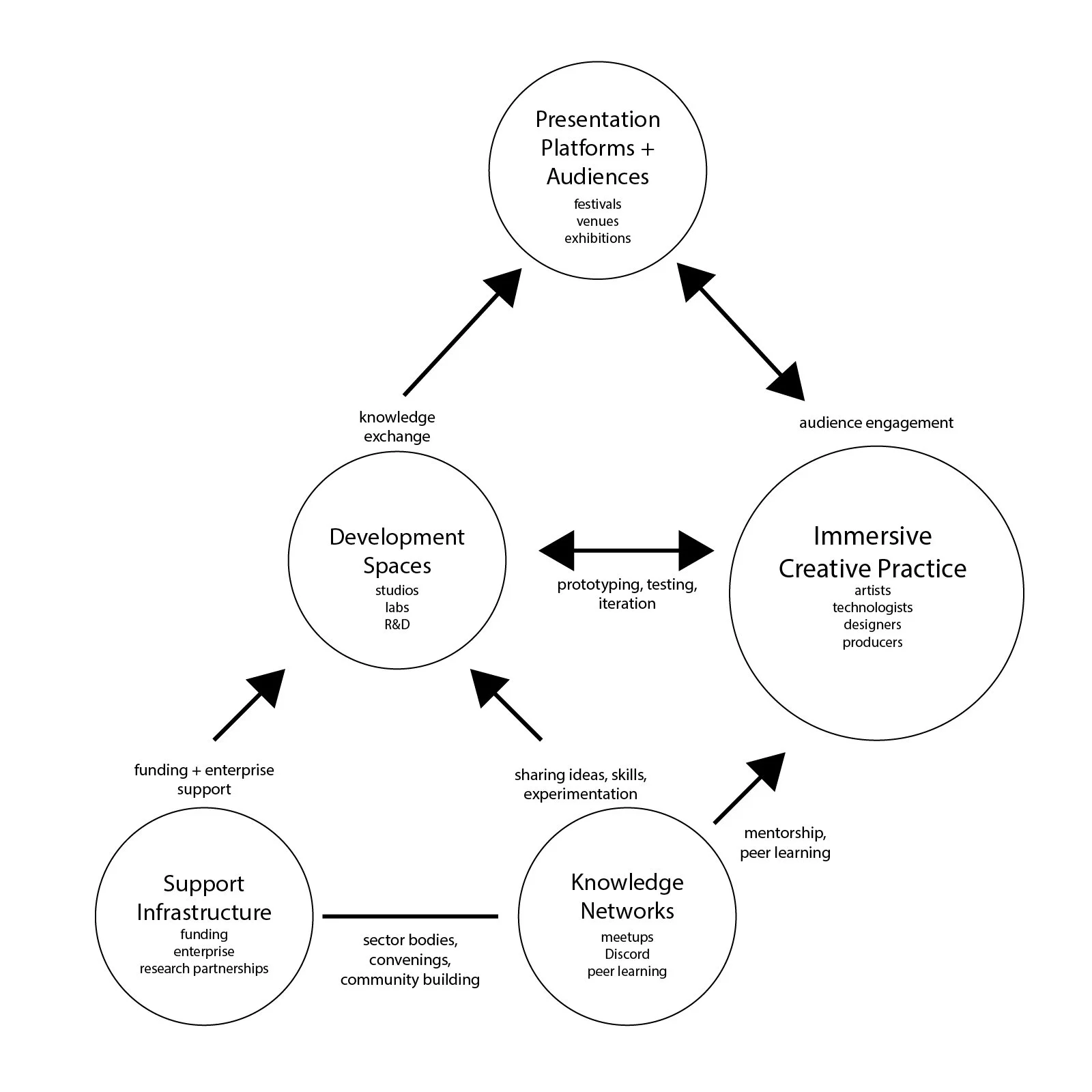
A Practitioner-Informed Model of the Immersive Innovation Ecosystem
Immersive practice emerges through the interaction of development space, knowledge networks, support systems and presentation platforms.
This model illustrates the interconnected infrastructure that enables immersive creative practice to develop, iterate and reach audiences.
About The Immersive Lens
This blog is part of The Immersive Lens, a Creative Scotland–supported research project by SUUM Studio. With funding from the National Lottery through Creative Scotland’s Go See Share programme, we travelled to Manchester to explore how immersive creatives across the UK are sustaining their work, creatively, financially, and emotionally.
Over the course of the project, we engaged with more than 20 practitioners working at the intersection of immersive arts, technology, design, and storytelling. We visited exhibitions, attended public and industry events, and held in-depth interviews with artists, technologists, curators, producers, and strategists shaping the future of immersive practice.
What we heard, and what we saw, is shaping this blog and vlog series. Each post will share insights, provocations, and reflections drawn from our field research, in the hope that they’ll support others navigating this evolving landscape.
The Immersive Lens was supported by the National Lottery through Creative Scotland.
Coming soon
This post is part of The Immersive Lens, a blog and vlog series by Suum Studio.
Next up: Blog 5 - What Comes Next?
Subscribe at SUUM NEWS or follow us on LinkedIn, TikTok and Instagram for behind-the-scenes content, new posts and future collaborations.

Image credits:
Header image -Supermassive UK, Salford Shopping Centre, March 2025
Image 1 -Fale Sa Sacred House FAFSWAG Arts Collective, part of MIF25, HOME Manchester, July 2025
Image 2-Trespass by Superflux, with 3D ArtistAdam Sinclair and App DevelopersNEEEUFree Augmented Reality experience at Factory International shared via their Factory Settings part of Manchester International Festival, Manchester, July 2025 (still available to view now)
Image 3 -Stories Brought To Life Frameless x National Portrait Gallery, Immersive Pop-Up, Media City, Salford Quays, July 2025
Image 4 -Supermassive UK, Salford Shopping Centre Installation, March 2025
Diagram 1 - The Immersive Innovation Ecosystem, derived from interviews, site visits and sector conversations undertaken during The Immersive Lens research project
Footer image -Chila Welcomes You, Chila Kumari Singh Burman, Imperial War Museum North, July Manchester 2025
All images and diagrams © SUUM studio unless otherwise stated
