The Immersive Lens Blog 5
What Comes Next?
Building the Future of Immersive Practice
Looking ahead
Immersive practice sits at a point of transition.
Over the past decade, the field has expanded rapidly across art, performance, design, real-time technology, gaming, virtual production and interactive storytelling. Yet sustaining this work, creatively, financially and operationally, remains a challenge.
Through The Immersive Lens, supported by The National Lottery via Creative Scotland, we set out to understand these pressures more clearly. Across interviews, site visits and our online gathering, one message appeared repeatedly: the future of immersive work will depend not only on creative vision or technological innovation, but on the systems that support it.
Infrastructure, funding pathways, research and development time, professional networks, industry partnerships and civic support all shape whether immersive practice can take root and continue.
This final blog reflects on what we learned and where the sector might go next.

Supermassive UK, Mayfield Depot, July 2025
Image © SUUM studio
Immersive practice is expanding,
but support systems are still catching up
Across Manchester and Scotland, we spoke with practitioners working between multiple disciplines. Some operate between real-time engines and contemporary performance. Others work between installation art and commercial technology, or between sound, design, storytelling and spatial computing.
This hybridity is one of immersive practice’s greatest strengths. It also creates structural challenges.
Many practitioners told us that they do not fully fit within traditional arts funding structures, yet they also lack clear pathways into technology investment or enterprise support.
Creative-technology practices draw from both worlds, but the systems around them are still catching up.
As Darren Grice of Salford City Council noted during our research, creative technology should not fall between sectors but be recognised as a sector in its own right, with its own pathways to grow.
His observation captures both the challenge and the opportunity. Creative technology is culturally significant and economically active, yet its support structures are still evolving.
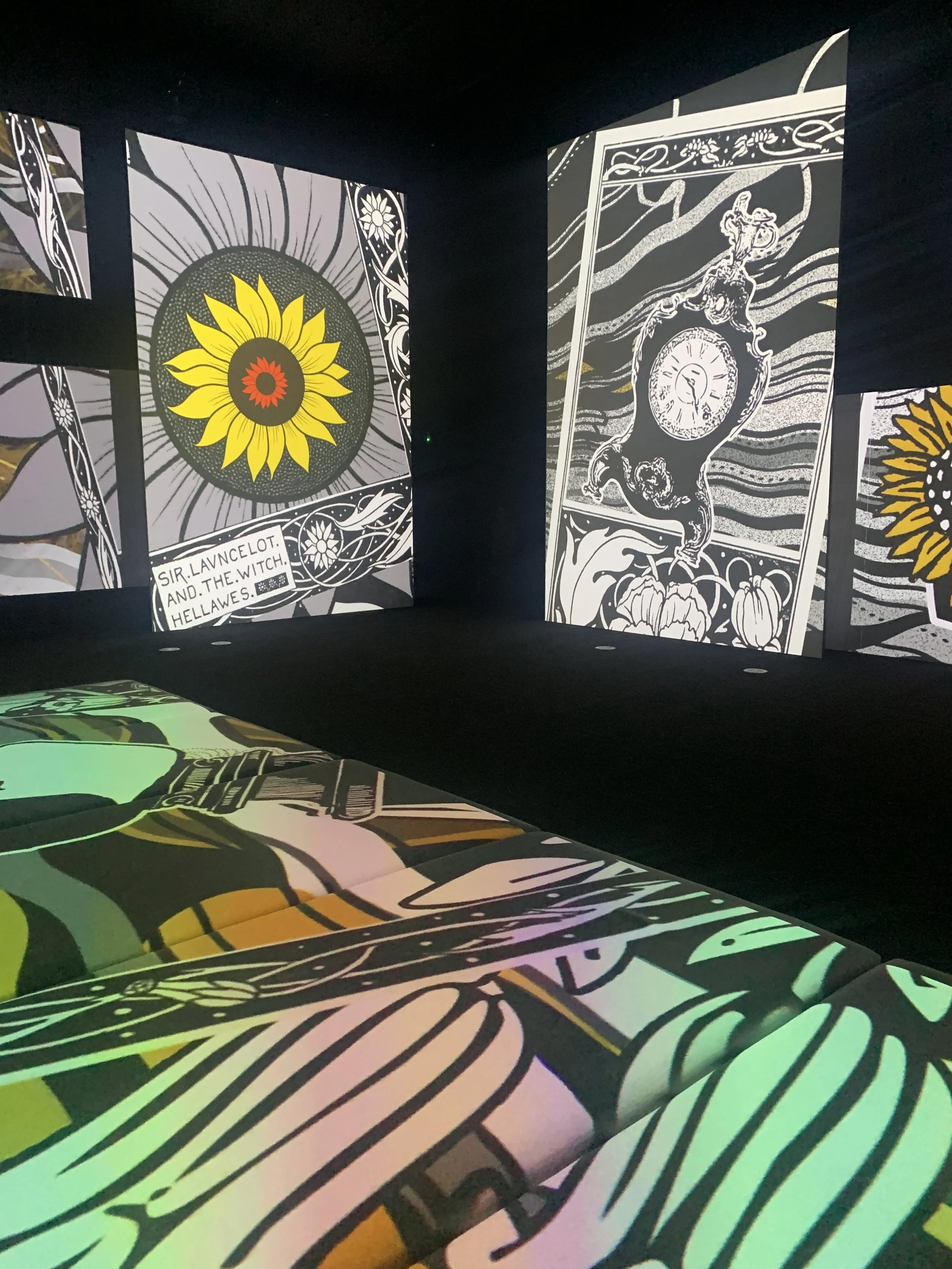
Stories Brought To Life Frameless x National Portrait Gallery, Immersive Pop-Up, Media City, Salford Quays, July 2025 Image © SUUM studio
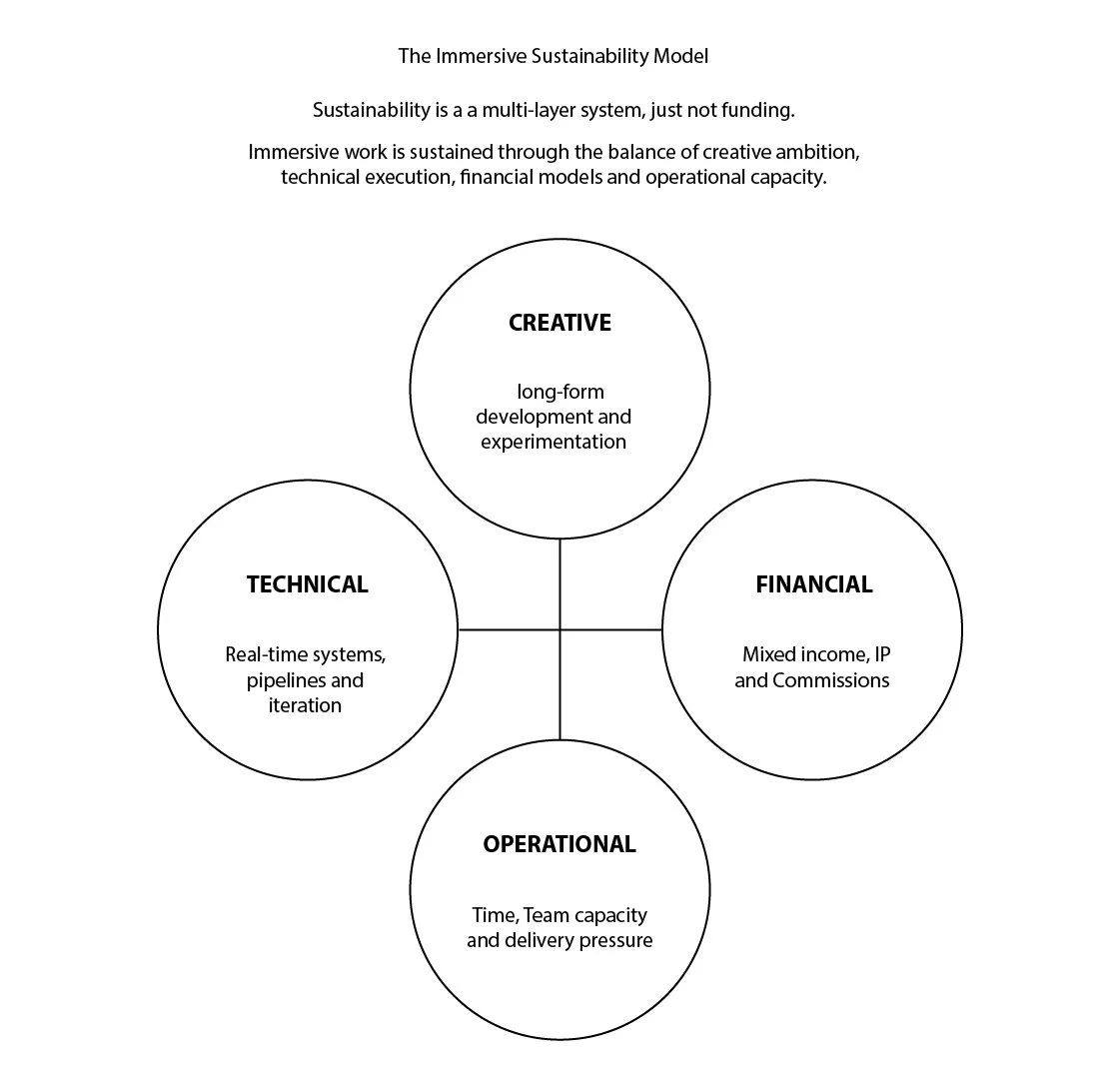
Across our interviews, sustainability was rarely described as a single funding model. Instead, practitioners spoke about a system of interconnected conditions that allow immersive work to continue over time.
Creative sustainability requires time to experiment and develop ideas without constant delivery pressure.
Technical sustainability requires stable production pipelines, testing environments and the ability to iterate.
Operational sustainability depends on collaboration, realistic pacing and networks that prevent isolation and burnout.
Financial sustainability usually comes from mixed models: public funding, enterprise programmes, commercial commissions, intellectual property development and long-term partnerships.
No single model supports immersive practice on its own. Instead, practitioners move between different forms of support as projects evolve.
Sustainability is a system,
not a single solution
Ecosystems matter
One of the clearest insights from our research was the importance of local ecosystems.
Manchester provides a strong example of how different layers of support can reinforce each other. Civic ambition, cultural programming, creative technology businesses and grassroots networks all contribute to an environment where immersive work can develop.
Free public events, accessible ticketing and festivals connect immersive work with audiences. Cultural institutions provide commissioning structures and presentation platforms. Universities and research labs contribute technical expertise, training, product validation and connections between academia, industry and communities. Grassroots meetups and peer networks create spaces for knowledge sharing and experimentation. Local governance and arts development supports this alongside immersive and innovation specific accelerators like Media City Immersive Technology Innovation Hub.
Practitioners repeatedly described Manchester as open and collaborative. As Future Artist’s Mark Ashmore noted, the city has an “open door culture” in which sharing research, making time for others and inviting people into projects is considered normal practice.
These relationships form the connective tissue that keeps the ecosystem active between projects.
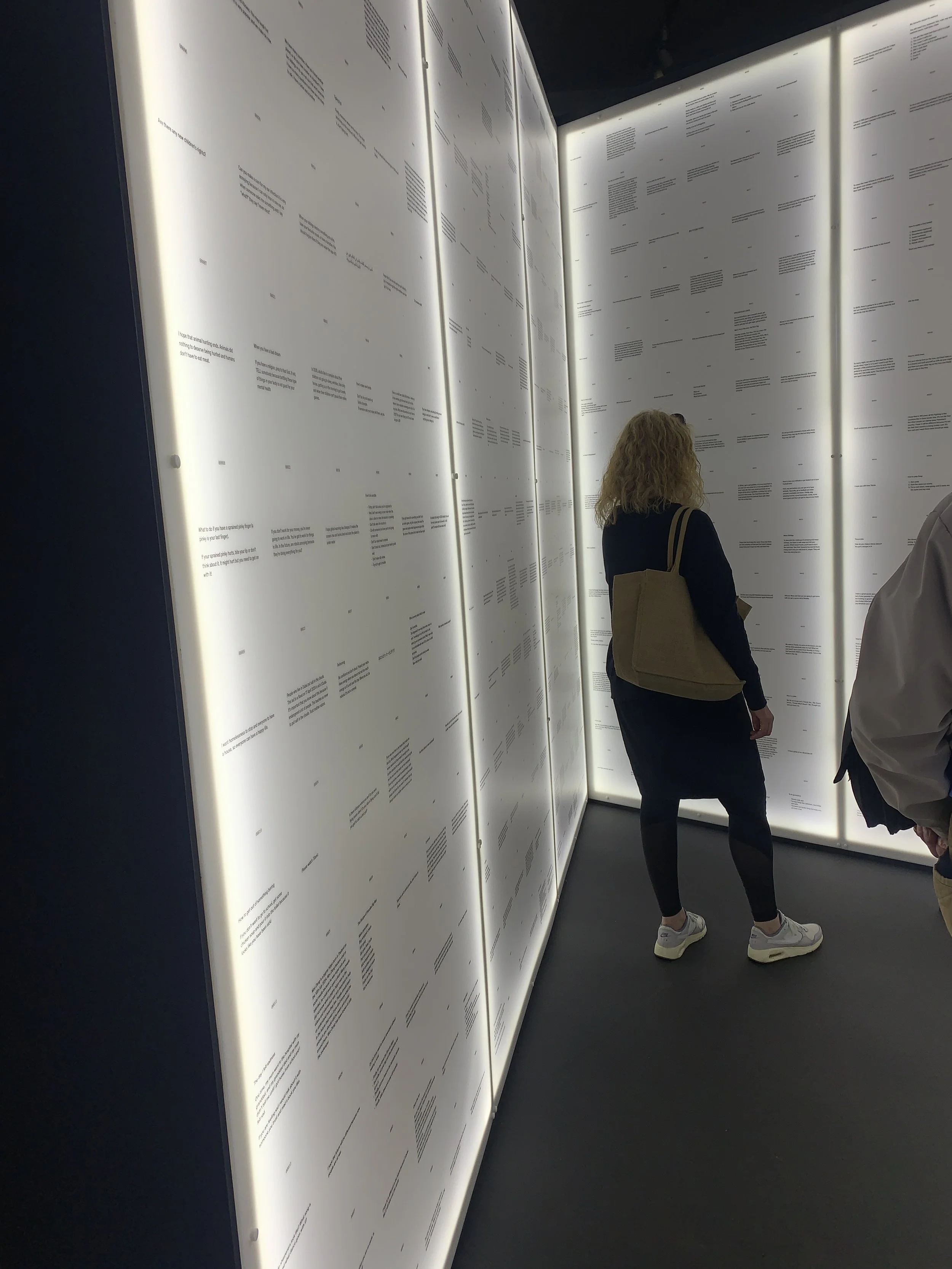
An Inheritance Andy Field Beckie Darlington Rosabel Tan Manchester Art Gallery
Manchester, July 2025, Image © SUUM studio
Scotland’s opportunity
Scotland also has strong foundations for immersive innovation.
Research infrastructure is growing through initiatives such as CoSTAR Scotland, XR-RIG at the University of Glasgow, interdisciplinary work at the Edinburgh Futures Institute and the Royal Conservatoire of Scotland’s Innovation Hub. Cultural organisations like Cryptic and festivals such as Sonica continue to commission ambitious digital work, while networks such as Creative Tech Scotland Gathering bring practitioners together across disciplines.
However, our research suggests that many of these systems currently operate in parallel rather than as a coordinated ecosystem.
The challenge ahead is not simply increasing investment, although this remains important, but coordinating direct investment in R&D and product development, plus supporting growth with immersive and innovation specific accelerators, while strengthening the connections between existing structures. When research infrastructure, enterprise support, cultural programming and practitioner networks align, immersive work has the conditions it needs to grow.
A mixed landscape of opportunity
Practitioners today navigate a wide landscape of opportunities. Funding may come from arts councils, innovation programmes, enterprise accelerators, research partnerships or commercial collaborations. Many studios combine several of these routes at once.
Public funding still plays an important role, particularly for early experimentation and cultural work. Enterprise programmes such as Techscaler, Innovate UK grants and regional innovation support can help creative-technology companies scale and develop products. Universities offer research partnerships and technical expertise. Conferences, meetups and peer networks provide access to knowledge and collaboration.
Taken together, these pathways form a complex but evolving support environment.
Understanding how to move between them is becoming an essential skill for immersive practitioners.
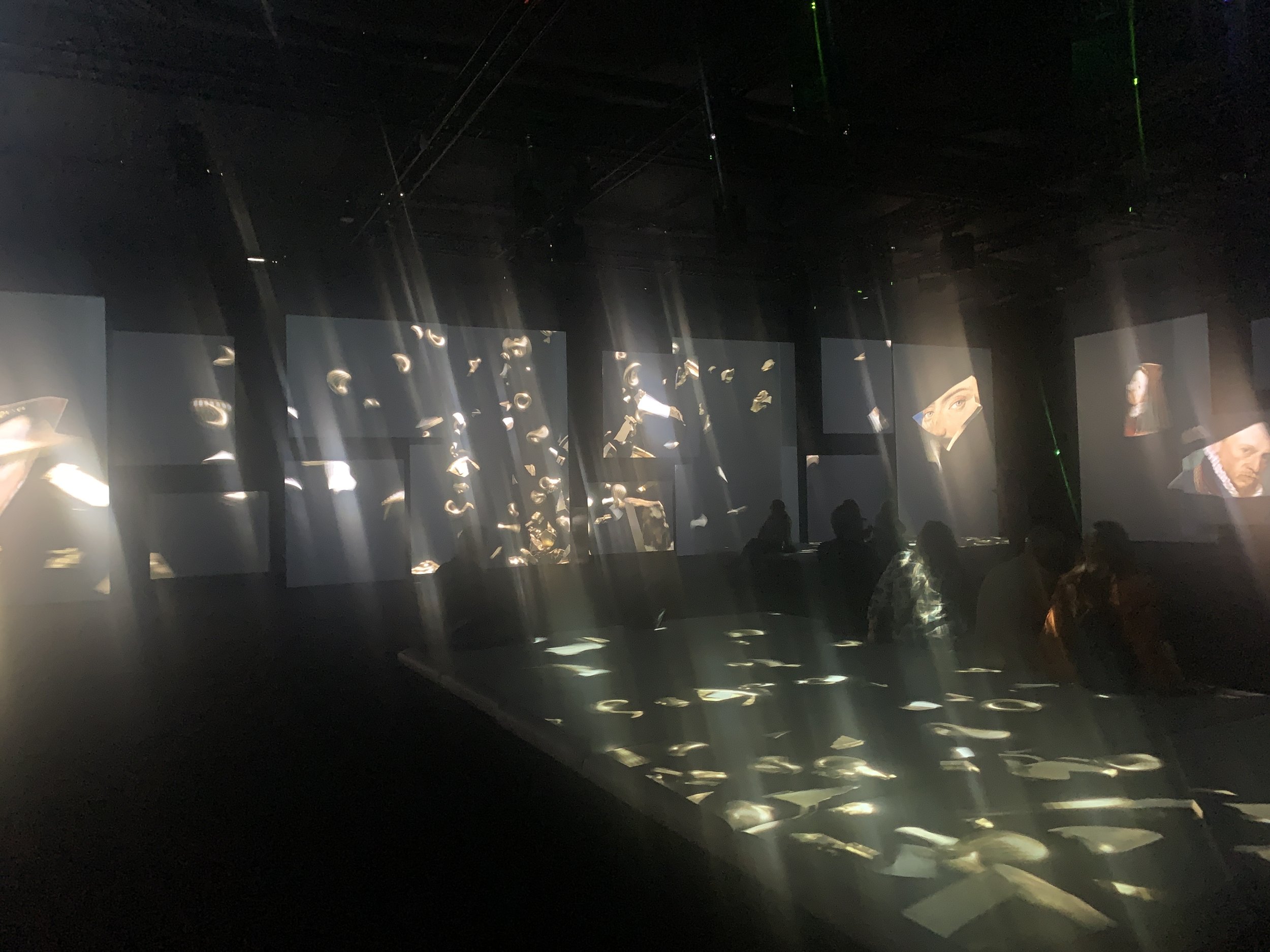
Stories Brought To Life Frameless x National Portrait Gallery, Immersive Pop-Up, Media City, Salford Quays, July 2025 Image © SUUM studio
Knowledge sharing as infrastructure
Throughout our research, knowledge sharing emerged as one of the most powerful forms of infrastructure.
Meetups, Discord groups, creative mixers and informal peer gatherings allow practitioners to compare methods, share resources and support one another between projects.
However, navigating the many modes and technologies of immersive practice while applying for funding and building networks is stretching practitioners and studios thin. This is not sustainable.
Building relationships of trust requires time, resource and space. The support structures and leadership needed to sustain this are still emerging.
In many ways, these networks form the social infrastructure that holds the sector together. Without coordinated support to form a sector voice or shared structure, the sum of these efforts risks fragmentation.
Suum Studio reflections
For Suum Studio, this research reinforced how central networks, collaboration and shared learning are to sustaining immersive practice.
Our conversations through the CoSTAR Ideate residency and with mentors such as Liz Rosenthal and Ben Schogler have helped situate our work within a wider creative technology landscape. The practitioners we met during this project continue to shape how we think about collaboration, experimentation and long-term sustainability.
This research also confirmed that immersive practice evolves most effectively when practitioners remain connected, sharing insights and learning from one another across disciplines and regions.
The next step is to create the space, infrastructure and community required for this to thrive.
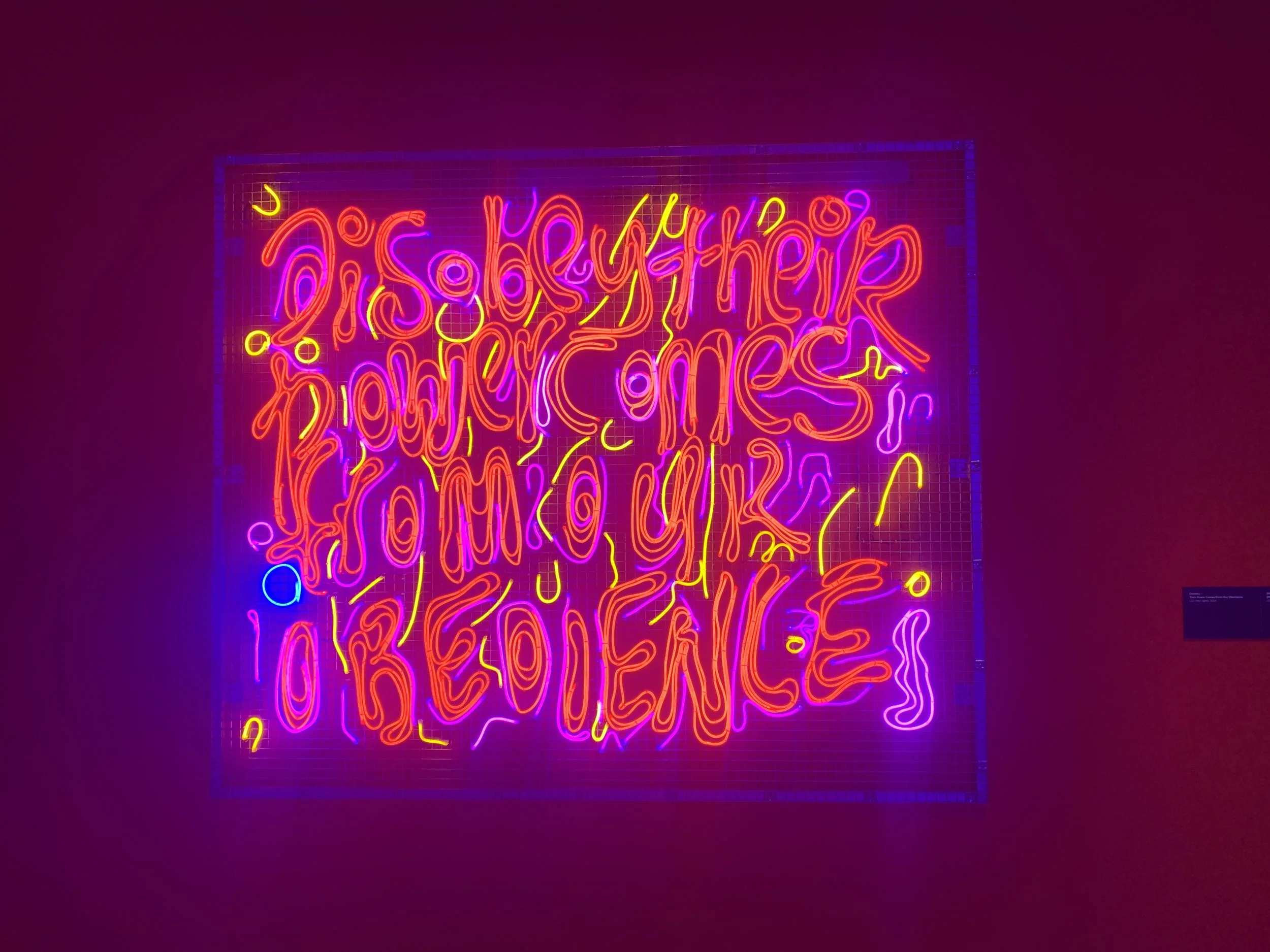
Chila Welcomes You, Chila Kumari Singh Burman, Imperial War Museum North, July Manchester 2025 Image © SUUM studio
What comes next
Across this series, we have explored what immersive practice means, who it is for, how practitioners sustain their work and the infrastructures that support it. Each of these questions reveals a different layer of the same ecosystem.
The conversations sparked through this research suggest that immersive practice is not defined by technology alone. It is shaped by people, communities, institutions and the environments that allow creative ideas to grow.
The audience, the market and the co-creators we make this work for must remain central. Immersive practice is driven not only by technological possibility, but by a growing demand for experiences that are deeper, more connected, more sensory and accessible in ways that extend beyond traditional forms.
As this research developed, it became clear that immersive practice cannot be understood through isolated examples alone. It requires shared ways of thinking about how work is created, sustained and supported across different contexts.
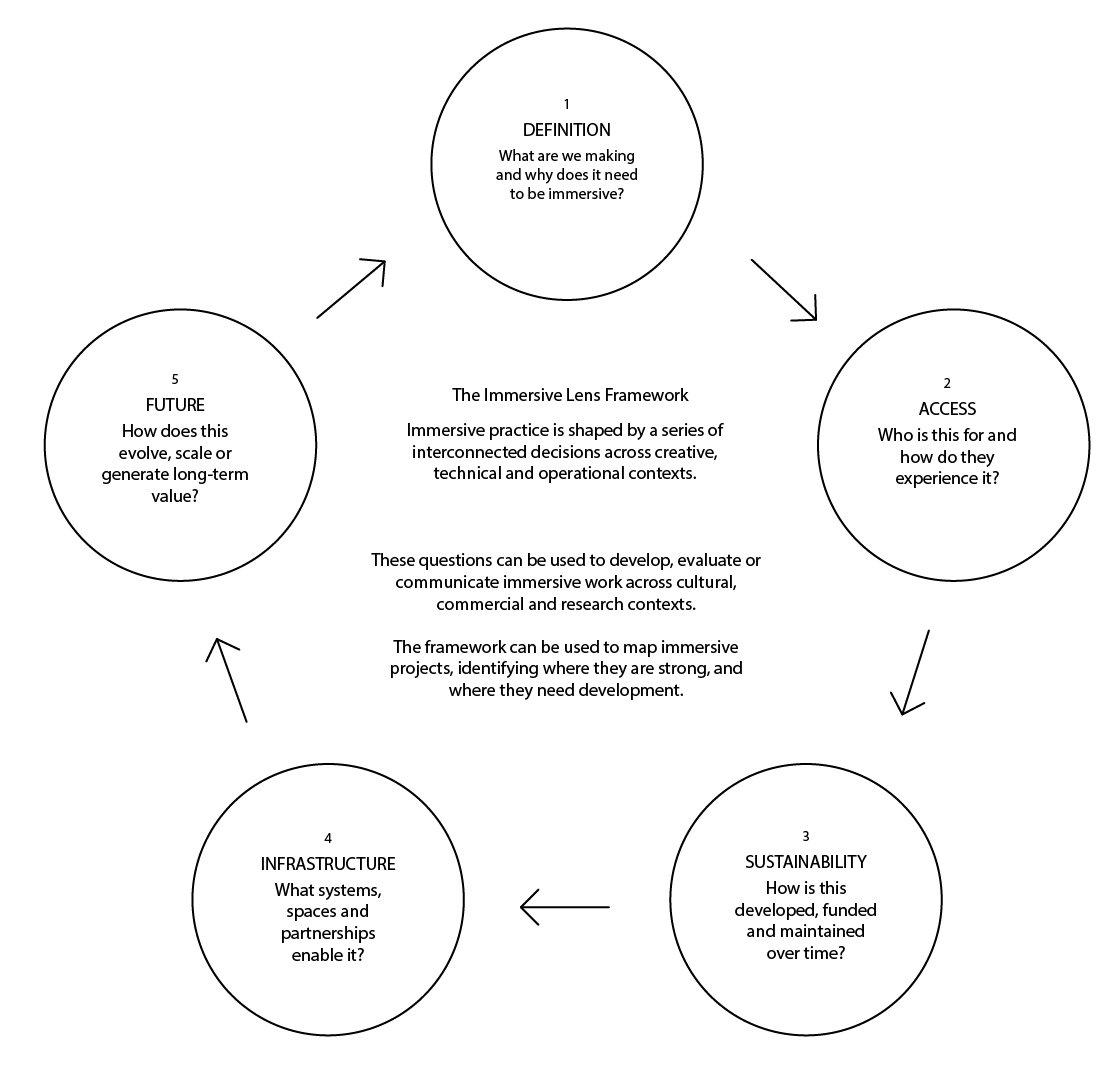
The following diagrams bring together insights from this research alongside our own practice at Suum Studio. They are intended as working models rather than fixed definitions, offering a way to navigate the complexity of immersive practice across creative, technical and operational conditions.
They can be used to support conversations between practitioners, institutions and industry, helping to clarify how immersive work develops, where it is supported and how it may be sustained over time.
From research to framework
The Immersive Lens Framework
The Immersive Sustainability Model
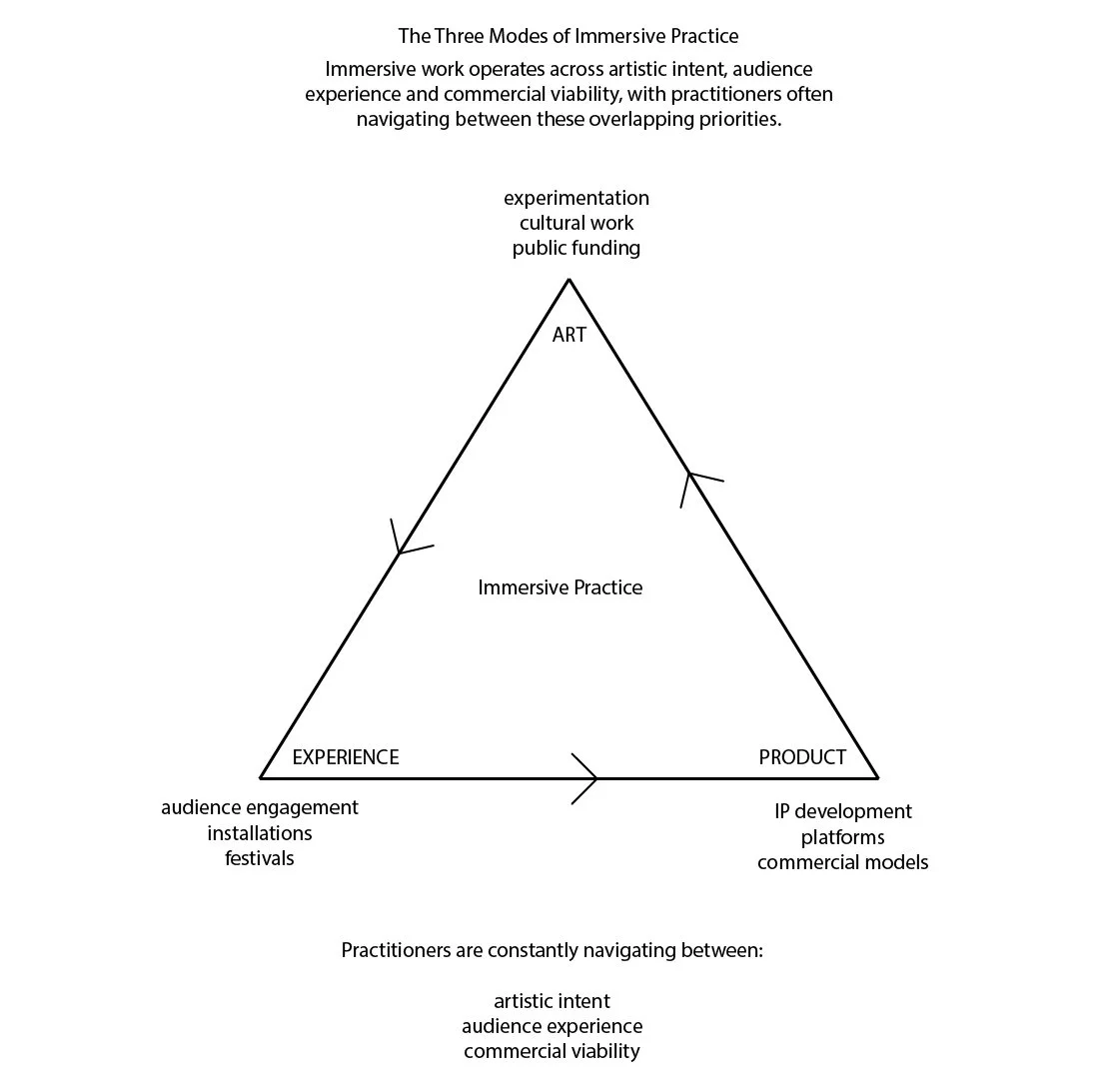
The Three Modes of Immersive Practice
Closing
The Immersive Lens will continue as an ongoing research and knowledge-sharing initiative by Suum Studio, exploring how immersive practice is defined, sustained and developed across the UK.
Through future articles, conversations and gatherings, we hope to remain connected with the practitioners, organisations and collaborators shaping this evolving field.
If you would like to stay part of this conversation, you can subscribe to our newsletter or join the growing network around the project. We will share new writing, events and opportunities as they emerge.
Immersive practice grows through collaboration.
The conversations started through this research are only the beginning.
Coming soon
putting these ideas into practice through Save The Rave, a live, playable music experience we’re building and releasing in real time.
Subscribe at SUUM NEWS or follow us on LinkedIn, TikTok and Instagram for behind-the-scenes content, new posts and future collaborations.
About The Immersive Lens
This blog is part of The Immersive Lens, a Creative Scotland–supported research project by SUUM Studio. With funding from the National Lottery through Creative Scotland’s Go See Share programme, we travelled to Manchester to explore how immersive creatives across the UK are sustaining their work, creatively, financially, and emotionally.
Over the course of the project, we engaged with more than 20 practitioners working at the intersection of immersive arts, technology, design, and storytelling. We visited exhibitions, attended public and industry events, and held in-depth interviews with artists, technologists, curators, producers, and strategists shaping the future of immersive practice.
What we heard, and what we saw, is shaping this blog and vlog series. Each post will share insights, provocations, and reflections drawn from our field research, in the hope that they’ll support others navigating this evolving landscape.
The Immersive Lens was supported by the National Lottery through Creative Scotland.

Image credits:
Header image - Supermassive UK, Mayfield Depot, Manchester July 2025
Image 1 - Supermassive UK, Mayfield Depot, July 2025
Image 2 - Stories Brought To Life Frameless x National Portrait Gallery, Immersive Pop-Up, Media City, Salford Quays, July 2025
Image 3 - An InheritanceAndy Field Beckie Darlington Rosabel Tan Manchester Art Gallery, Manchester, July 2025
Image 4 - Chila Welcomes You, Chila Kumari Singh Burman, Imperial War Museum North, July Manchester 2025
Diagram 1 - The Immersive Lens Framework, a five-part decision-making framework for developing, evaluating and communicating immersive work across creative, technical and operational contexts.
Diagram 2 - The Immersive Sustainability Model, a systems view of immersive practice, showing how creative, technical, financial and operational conditions must be balanced to sustain work over time.
Diagram 3 - The Three Modes of Immersive Practice, a model illustrating how immersive work operates across artistic, experiential and commercial modes, and how practitioners move between them.
Footer image -Stories Brought To Life Frameless x National Portrait Gallery, Immersive Pop-Up, Media City, Salford Quays, July 2025
All images and diagrams © SUUM studio unless otherwise stated.
All diagrams developed by SUUM Studio as original research outputs from The Immersive Lens